On your own, try to discuss a heart surgery with a patient using only words or a static diagram. Sounds challenging, doesn’t it? Now show them a 3D animation of the procedure with each valve, every artery, and every heartbeat moving in front of them. That is the value of 3D medical animation, and what it brings to education, marketing, and communication in healthcare.
In this guide, we’ll cover everything you need to know about 3D medical animation with analysis of its benefits, applications, trends, and return on investment. After we walk through all of this, you will see why you don’t want to think of it as an option, but rather a must in today’s healthcare ecosystem.
What Is 3D Medical Animation?
We’ll begin with straightforward definitions: 3D medical animation is the art of converting complex medical or biological concepts into moving, three-dimensional representations. In other words, it is giving life to science – a heart doesn’t just beat on paper; it moves, reacts, and demonstrates actual processes.
- Uses 3D modeling to build organs, tissues and devices
- Utilizes motion graphics to create realistic animation
- Includes simulation for precise movement and interactions
3D animation illustrates and simplifies understanding of mechanisms of drug action, surgical procedures, medical products and medical devices, creating a memorable visual experience.
Benefits of 3D Medical Animation
You might wonder, “Is this just a fancy way to make things look cool?” Not at all. The benefits go far beyond aesthetics. Here’s why healthcare organizations, universities, and pharma brands are investing heavily in 3D medical animations:
1. Clarifies Complicated Ideas
Medical science can feel complicated, similar to a ball of yarn knotted up. Animation unknots it. Students or patients are able to visualize abstract processes such as blood flow, mechanism of drug absorption or cell interactions without confusion.
2. Increases Learning & Retention
It has been shown that people remember visual information much better than reading text. Medical students or practice surgeons comprehend a procedure much quickly after viewing it in an animation.
3. Increases Marketing Value
For pharmaceutical companies or medical device companies, animations provide a memorable brand experience. Clients are able to visualize exactly what a device does and how a drug works in the body instead of reading a brochure.
4. Increases Patient Communication
Picture yourself attempting to explain a procedure to an anxious patient. An 3D animation eliminates all misunderstandings and answers and turns anxiety into understanding. Patients become even more informed and confident, thus enhancing satisfaction.
Applications in Education & Training
Medical education is changing. The days when textbooks served solely as the guide to the body is in the past. Here is where 3D medical animation can be helpful:
- Anatomy Class: Students will work with moving organs instead of 2-dimension static pictures.
- Surgical Training: Surgeons, with the animation, can simulate procedures, practice, and avoid costly mistakes.
- Error Reduction: The animated simulation will point how errors could occur and allows for trainees to learn without risk.
- AR/VR: Simulations will enhance patient education opportunities and add in an immersive experience.
Think of it as giving students a flight simulator to practice operating a plane without any risk to people.
Ensuring Scientific Accuracy in Medical Animation
An excellent animation is more than just a flashy display of images, it must have a radiological basis. If there is an animation of a drug showing an effect on an organ that is not the right organ, that is potentially harmful, right?
- Working with collaborators: Subject matter experts, including physicians, researchers and biomedical engineers, review every pixel.
- Peer review and compliance: The animation is drawn based on medical guidelines to ensure credibility.
- Candid sources: Data is identified from peer-reviewed studies, not surmising.
Accuracy builds trust, which is important in interactions with healthcare professionals and patients.
Medical Animation in Pharmaceutical Marketing
Are you considering whether animations may be useful in pharma marketing? Very much so! Here are the reasons why they work:
- Describe the mechanisms of the drug: Patients and physicians are able to comprehend even complex processes clearly.
- Engage investors: Visual storytelling creates engaging presentations for investor meetings.
- Build brand authority: High-quality animations demonstrate expertise and innovation.
- Increase the likelihood of adoption: Physicians are much more likely to prescribe medications when they understand them
Essentially, you need to think about depicting science visually, and making their abstract ideas easy to digest and share.
Medical Device Animation & Emerging Trends
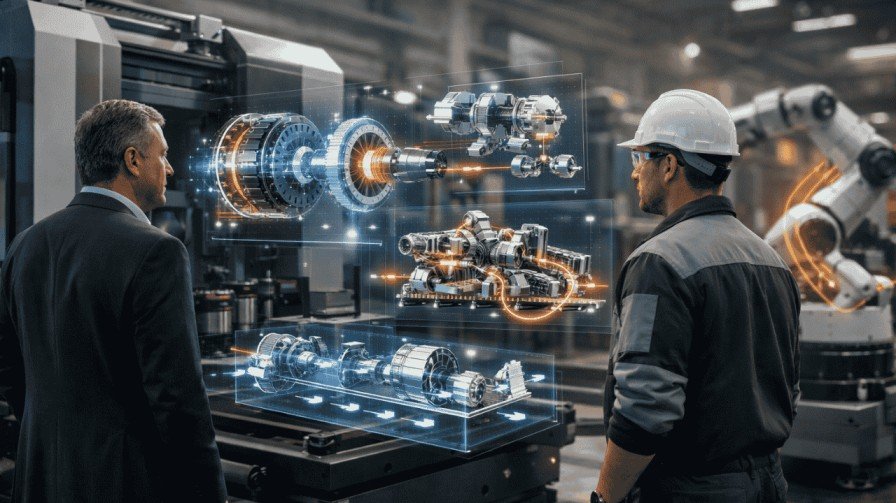
Medical devices are complex. But how do you present them to someone – a doctor, client, or investor? 3D animation can come to the rescue.
Things to look for in 2026:
- AR/VR demos: Doctors can interactively explore how devices work in virtual environments.
- Interactive simulations: Users can manipulate devices in a digital way.
- Realistic materials and motion: High-quality rendering to make devices look and behave realistically.
- Access from anywhere in the world: Cloud based animations allow global teams to see demos.
You can check out the guide on Exciting Trends in Medical Device Animation in 2025-26. Animation is more than education – it fosters confidence to drive adoption and sales.
How Medical Animation Boosts Sales & ROI
This is where creativity and business collide. Can medical animation drive ROI? Yes – here’s how:
- Understanding → Quicker decision-making: Clinicians can understand the benefits of your product more quickly.
- Engaging content → More conversions: Digital marketing campaigns with animation convert better than with static content.
- Reduced training costs: Less reliance on expensive in-person workshops.
- More buy-in from investors: Visualizing what they are investing in significantly speeds understanding and stakeholder investment.
In summary – the investment in 3D medical animation pays for itself through training efficiency, expanded awareness, and revenue opportunities.
Cost Considerations
Some people may think, “Isn’t animation expensive?” While it’s true that quality can cost something, the return-on-investment often greatly outweighs the cost…Things that will affect the cost include:
- Length of project and complexity
- Degree of scientific accuracy required
- 3D modeling depth and rendering quality
- The length of animation and user interactivity
Tip: Quality over quantity! A quality 3D animation can have a lasting impact long beyond what is produced.
Choosing the Right Medical Animation Studio
It’s important to select the most suitable partner. Here are signs to look out for:
- Portfolio and experience: Assess whether they have client or independent experience in healthcare, pharmaceuticals or medical devices.
- Expertise in accuracy: It is essential to look for studios that are consulting experts with scientific backgrounds.
- Review and feedback process: Understand that the studio has checks and balances for quality checks.
- Technology and tools: Be mindful of some studio capabilities using modern engine 3D, AR/VR tools, and motion graphics capabilities.
Think of it like choosing a pilot for a complex flight – other than student pilots, experience and expertise of the pilot is everything. If you are interested you can choose Render Edge Studio.
Main Highlights:
- 3D medical animation takes complicated medical topics and presents them in a simple manner.
- Supports learning, patient engagement, and marketing.
- Scientific accuracy is essential — trust cannot be compromised.
- Emerging trends include AR/VR, and interactive simulations.
- 3D renderings that are high-quality will achieve a measurable ROI.
Final Thoughts
3D medical animation exceeds a passing fad — it is a revolution in healthcare communication, training, and marketing. By breaking down complicated ideas, validating science, and increasing engagement, it supports doctors, students, patients, and marketers into smarter decisions.
Whether you’re a pharma brand, medical device company, or educational institution, investing in high-quality 3D animations is like giving your message superpowers – it moves, it talks, and it sticks.
Are you ready to turn your healthcare content into an unforgettable visual experience? Let’s turn your ideas into reality with 3D medical animation to maximize understanding, engagement, and ROI.
FAQs About 3D Medical Animation
Q1: Can 3D medical animation replace live demonstrations?
Ans: Not completely. It complements live demos, providing visual clarity and enhancing learning.
Q2: How long does it take to create a high-quality animation?
Ans: Depends on complexity, but typically 4–12 weeks for detailed projects.
Q3: Is it suitable for small clinics or just big hospitals?
Ans: Anyone can benefit — from educational institutions to pharmaceutical brands.
Q4: Do animations improve patient compliance?
Ans: Yes — patients understand procedures and treatments better, leading to higher adherence.