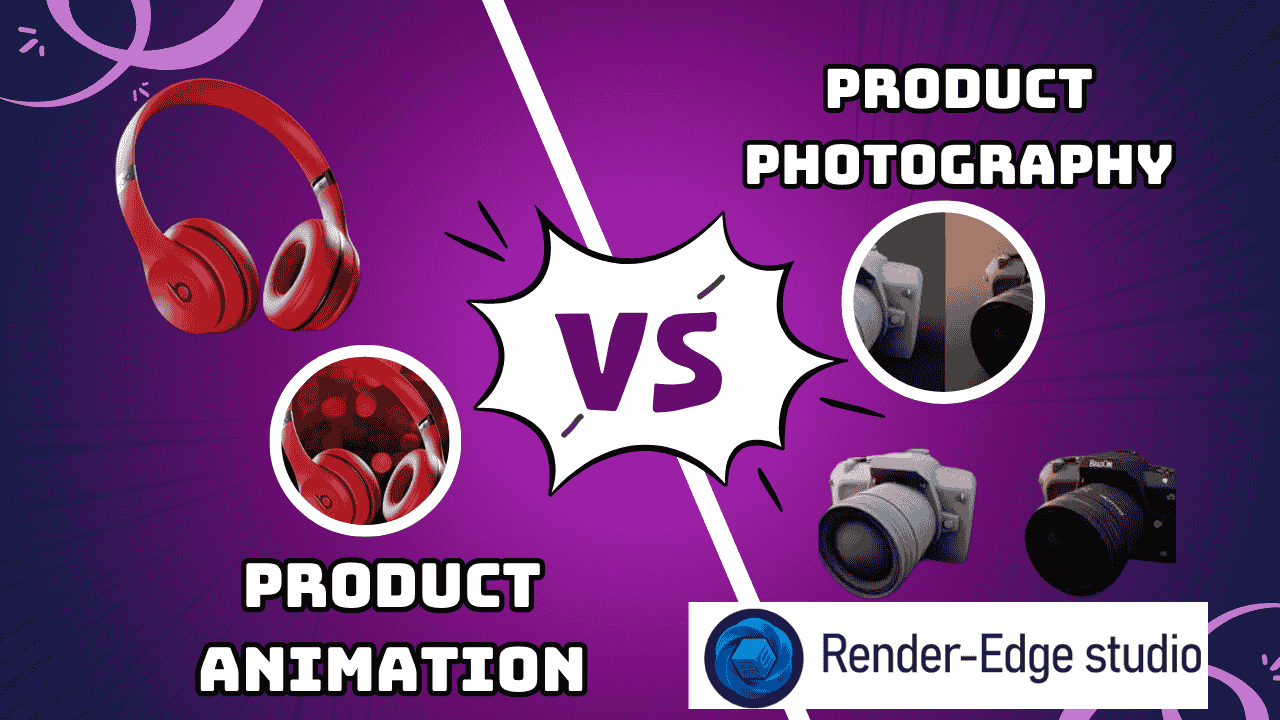
When it comes to displaying products online, a question businesses often ask themselves is: should you stick with traditional product photography or take the plunge into 3D product animation? Each has specific benefits, but understanding how they differ will guide brands in making educated decisions of product marketing, e-commerce, and digital presentations.
In this guide, we’ll look at everything from cost comparisons and creative flexibility to actual applications, so that you have a clear understanding of which is right for your products.
What Does 3D Product Animation Mean?
Think of 3D product animation as putting a pulse into your digital models. Designers utilize Computer-Generated Imagery (CGI) and 3D Rendering to make interactive, lifelike animations of products that may not even exist yet.
3D animations allow potential purchasers to do things that static photographs cannot, such as:
- View products from every angle.
- See textures and materials.
- Interact with elements like 360° views or AR integrations.
For example, if you’re launching a new, futuristic accessory or piece of custom furniture, a 3D animation can show it to your customers in ways the best camera could never achieve. 3D product animation is compelling and flexible—you can change as many aspects of the product after the fact without the need to invest in a new photo shoot.
Learn more about how you can apply 3D animation to your products here: 3D Product Animation.
What is Product Photography?
Product photography is the traditional approach to photographing real products using a camera. This encompasses a variety of images from e-commerce images to commercial photo campaigns. It’s real, honest and offers customers a real view of your product.
The benefits of product photography are:
- Authenticity: Shows the real product, as-is.
- Trustworthiness: Customers see an exact item instead of a digital model.
- Familiarity: Recognized and understood as a form of marketing.
The drawbacks are: it’s costly to make changes and photographing more complicated or non-existent products can be nearly impossible.
Key Differences Between 3D Animation and Product Photography
Let’s break it down into an easy-to-read table for clarity:
| Feature | 3D Product Animation | Product Photography |
| Flexibility | Can show products from any angle, in any environment. Easy to update. | Fixed once shot. Changes require reshoots. |
| Cost | Can be cost-effective for complex products or multiple variations. | Usually cheaper for simple, real products. Expensive for complex setups. |
| Creativity | Unlimited: can create conceptual or impossible scenes. | Limited by physical environment and lighting. |
| Interactivity | Allows 360° views, motion graphics, AR/VR integration. | Static images; no interactive elements. |
| Time Efficiency | Quick updates, revisions, and iterations. | Time-consuming to set up, shoot, and edit. |
| Use Case | Unreleased products, complex or highly customizable items, immersive e-commerce experiences. | Simple existing products, when realism and authenticity are key. |
To get a clear idea you check out this guide on Comparing 2D Images vs 3D Animations.
Why Use 3D Product Animation?
3D product animation is not just eye-catching; it’s an effective marketing tool. Here’s why more brands are utilizing it:
Unlimited Creative Potential
In 3D animation, you are not limited by the physical reality of the objects. You can have a product hovering in space or have a product do something that simply isn’t possible in reality.
Interactive Style
Customers love things that are interactive. Everyone knows the common 360° views of product videos, even the pull AR try-on services, there is a level of engagement and memorability that 3D animation can bring to shopping experiences.
Gives you an edge with eCommerce
Digital platforms like Amazon and Shopify rank visually rich product content higher in their search categories. Quality animation can also save time, and lower returns rates, giving insight to customers before they make a purchase.
Cost-Effective for complex products
For products that have many variations and custom options, or products that are prototypes, 3D animation can be a more cost-effective alternative than shooting multiple photo sessions.
Boosted Brand Image
Sleek animations can suggest attention to detail, sophistication, and professionalism, all of which elevate trust and the perception of quality for customers.
Real-world examples of how 3D animation can drive conversion or increase sales can be seen here: How 3D Product Animation Increases Sales?
When Product Photography Continues to Matter
Although 3D animation can be exciting, photography still has its place:
1. Real Products Only: When the product is real and simple, often photography will suffice.
2. Affordable and Simple: A simple shoot can be less expensive than creating a single, simple 3D product.
3. High Fidelity Detail: When you need to see, feel, or touch realistic detail like fabric or textures, photography usually still feels more real.
For example, when a clothing brand is trying to show and convey fine fabric textures, they may show a commercial product photograph, since they want viewers to associate their product with quality.
A Corporate Framework: Assessing the Best Approach
The following simple workflow will assist you in determining if you should pursue your project with 3D animation or product photography:
1. Evaluate Your Product Complexity
- Is it customizable, unreleased, or complex? → 3D Animation
- Is it simple, real, and ready to ship? → Product Photography
2. Clarify Your Marketing Goals
- Do you desire interactive experiences on your website? → 3D Animation
- Do you want static, real, and authentic images for a catalog? → Product Photography
3. Consider Your Budget and Timeline
- A 3D animation may cost more upfront for high-end renderings, but those costs may be offset with fewer shoots.
- In contrast, $3D Photography is less costly up front, but less flexible.
4. Examine What Engages Your Audience
- Depending on the audience you are trying to attract, a younger, more tech-savvy audience will likely bond with their expectations of seeing animated visuals and motion graphics.
- A more traditional audience may respect seeing a more realistic product image.
5. Option For Both!
Many successful brands provide a hybrid approach of 3D product animation for online marketing and video (as well as social media) along with photography for a catalog or print.
Real-Life Examples
1. Furniture E-commerce: Offering 3D furniture animations so customers can spin and view different chairs, tables, and couches from a 360° angled perspective before they make a purchase. For additional examples of such interactive animations, you can check 3D Furniture Animation Services.
2. Medical devices: As a 3D animation can depict complex or involved processes, so products can be shown safely and clearly in use. Learn more about similar projects at Medical Product Animation Services.
Cost Comparison: 3D Animation vs Product Photography
| Aspect | 3D Product Animation | Product Photography |
| Single Product | $500–$2,500 (depends on complexity) | $100–$1,000 (depends on shoot) |
| Multiple Variations | Cost-effective: small incremental changes | Expensive: separate photoshoots needed |
| Time to Update | Hours to days | Days to weeks for reshoots |
| Creative Freedom | Unlimited | Limited |
Key Takeaway: 3D animation becomes more cost-effective as product complexity increases.
Important Points
- 3D product animation = versatile, interactive, great for complicated, unreleased items
- Product photography = realistic, uncomplicated, economical for real items
- Mixed solution = increased engagement, trust, and creative possibilities
- E-commerce & marketing utilize 3D rendering, CGI, & motion graphics
Final Thought:
Picture this: You’re not just showing your prospective customer a view of your product. Instead, imagine providing them with a spinning view outside of a standard flat view, allowing them to engage with the product and ultimately see every feature that you’ll want to eventually sell to them – that is the strength of 3D Product Animation!
There are times that you just can’t beat a simple, beautiful photo, especially when you want your potential customers to feel trust and authenticity, but understanding the differences between product photography and 3D animation is the first step to developing a visual content strategy that converts.
If you want help with 3D product animation or photorealistic rendering, check out services from Render Edge Studio: High Quality and affordable 3D Product Animation.
FAQs – 3D Product Animation vs Product Photography
1. Will 3D animation eventually replace photography?
Not always. However, photography is likely better for simple, tangible products where realism matters most. 3D animation wins all day for interactive, complicated, or unreleased products.
2. How realistic can 3D product animation look?
With photorealistic rendering and CGI, 3D animation can be indistinguishable from photographs — it can even fool set-trained eyes in some cases.
3. Is 3D product animation appropriate for e-commerce applications?
Absolutely. Product visualizations, fewer returns, and more engagement — it’s perfect for online stores.
4. How do I know what method will be best for my business?
Start on your product complexity and audience, and your overall marketing goal. Most of the time, a combination will be the answer.
5. Does it help with marketing?
Yes. Combining motion, digital product presentation, and interactive visuals will help, and significantly improve, your brand and sales.
Read More About:
What is the difference between animation and 3D render?