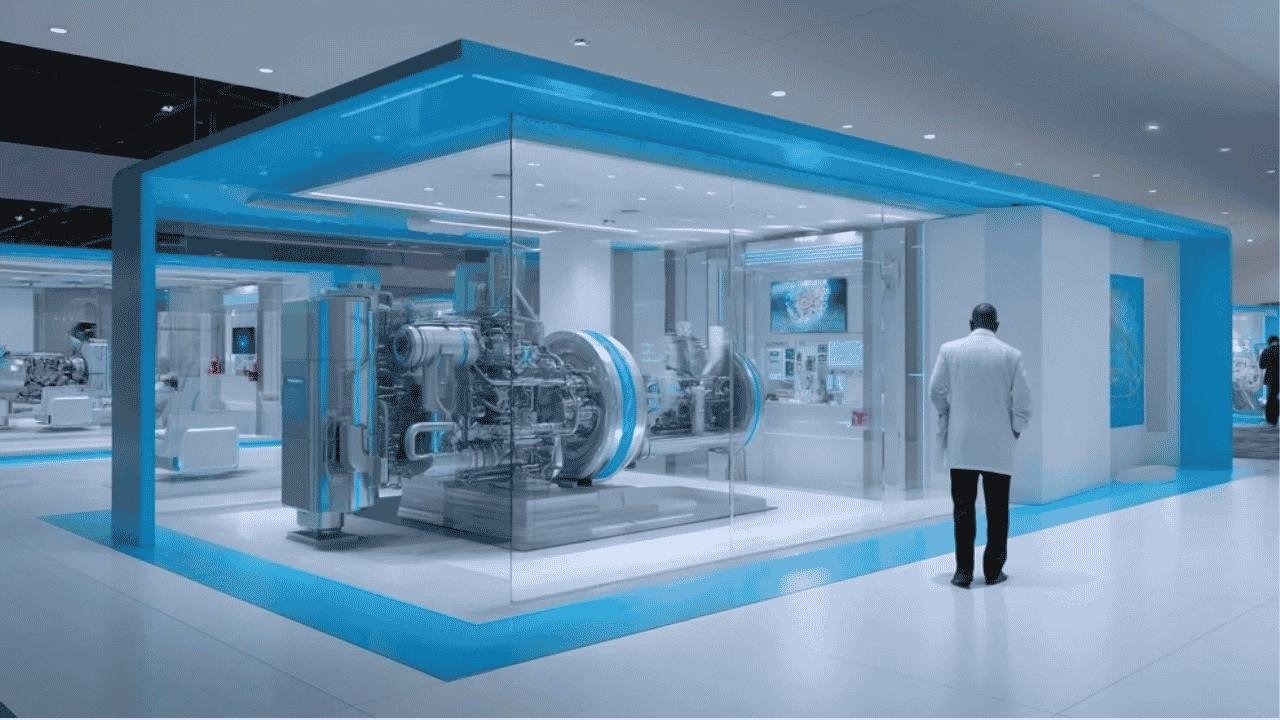
What once was seen as a unique marketing opportunity in medical device animation has turned into a revolutionary resource for communicating in healthcare. Whether educating patients, developing surgeon education or demonstrating a new device or opportunity to investors, animating complex medical information can make the idea more tangible to your audience. As we look ahead into 2026 from where we are in 2025, we can already see the continued evolution of innovations in this field. Let’s jump into some of the exciting advancements in medical device animation in which we can participate in 2025 with a look to 2026 and talk about the technologies being created that allow for more animation in healthcare.
Why Medical Device Animation Matters More Than Ever
Consider trying to describe a robotic surgical device or a little nanobot delivering medication inside the body with only words or pictures. It would be challenging. This is where 3D medical animation or medical product animation comes into play.
- Visual Explanation: We can easily grasp complex processes.
- Engagement: Animation attracts engagement more than text-heavy manuals.
- Time Learning: Surgeons, nurses and medical staff can learn more quickly.
- Marketing: Often, a product animation drives higher engagement and conversions than a live product demo.
In fact, the benefits of 3D medical animation for healthcare marketing can be measured, while companies are reporting quicker buy-in by investors, accepting their technology more rapidly, and patients are understanding their medical process.
Future Trend In Medical Animation
As technology continues to advance, the prospects of medical animation will transform healthcare communications. From artificial intelligence-generated visualizations to immersive VR simulation, emerging technologies will make complex medical ideas easier to comprehend while improving engagement and interactivity for both professionals and patients. Let’s know about the medical device animation trend.
1. Real-Time Rendering and 3D Medical Animation Software
One of the greatest changes in medical device 3D animation trends 2026 is the option of real-time rendering. Consider it like Photoshop, on steroids; changes can be made immediately, allowing us to see visuals at the ultimate quality, instead of waiting around for 24 hours.
Here’s why it’s important:
- Reduced timelines – produce the animation faster.
- Flexible client revisions – no more Rewind – Repeat, back and forth.
- Anatomical modeling accuracy – every artery, vein and component of the device looks natural.
Popular 3D medical animation software today like Blender, Autodesk Maya, and Unreal Engine are at the forefront of that technology. These technology platforms can combine interactive medical device animation, allowing healthcare professionals and patients alike to engage with a simulated hands-on experience, virtually.
Quick tip – if you are thinking about a medical animation project, ask your studio about real-time capabilities. It can save you a lot of time and money.
2. AI and VR in Medical Animation 2026
AI isn’t just a trend—it’s changing how animations are produced. AI tools are already automating repetitive tasks, developing high-quality anatomy models, or even recommending the best way to visually represent the information to your audience.
Here are some of the most important trends:
- Generative AI for animation sequences – generate variations or procedural models.
- Predictive analytics – data-driven suggestions for improving learning.
- AI-based personalization – animations that will adapt to a user’s skill level, knowledge, or patient’s profile.
Combining AI with virtual reality (VR) or augmented reality (AR) is a deeper level of immersion. Visualizing a surgeon using a virtual patient to practice or a patient using a virtual device to understand how it works inside their body is not just about being cool and flashy, it increases understanding, lowers errors, and builds engagement.
3. Short-Form, Interactive, and Hybrid Animations
Attention spans are declining. Healthcare providers and patients desire shorter, succinct content. Regardless, short-form animations will be the leading segment of the animation industry in 2026.
- Short-form (less than 5 minutes): Designed for social media, e-learning, and training quickly.
- Interactive animations: Viewers can click, rotate, and manipulate devices, introducing interactivity and active learning.
- Hybrid animations: Using 2D and 3D together so that 2D graphics can be used to present clear and concise.
For example, a hybrid animation may feature a 3D heart pumping with a clear 2D overlay describing the valves. This is a visually exciting animation, but without overwhelming detail.
4. Personalized and Inclusive Medical Animations
Healthcare is everywhere, and animation should reflect that. Cultural relevance and personalization are trending for a reason.
- Representation matters: There are animations with diverse ethnicities, ages, genders, and abilities.
- Adaptive content: AI can modify language, tone, and complexity based on viewers.
- Accessibility: Subtitles, narration, and simplified visual cues allow anyone can use your content.
This goes beyond ethics, it’s smart business. Personalized, inclusive animation has a stronger connection with audiences, and therefore, better engagement and return on investment.
5. Data-Driven and Predictive Animations
Data now extends well beyond mere charts and spreadsheets. Our second analytics-driven evolution in animation is the ability to track user interaction and engagement within animations. From that, we can:
- See which visuals—even which messaging—are effective.
- Predict how a new animation would perform, before even getting into production.
- Improve learning and marketing effectiveness by providing better feedback in real-time.
Think about it like A/B testing, but for medical visuals. So, we know that every animation we produced is not only visually stunning, but also effective.
6. Regulatory Compliance and Ethical Considerations
Along with power comes responsibility. Medical animations must abide by regulations to be credible. Regulatory organizations that covers medical devices often have strict guidelines for truthfulness, safety for patients, and advertising.
Important considerations for 2026:
- Confirm all medical claims against official data.
- Respect privacy of patients if you are using real data.
- Add disclaimers where relevant.
- Keep abreast of standards internationally, if you are target a global audience.
It can be damaging to patients and to your brand reputation to disregard regulations.
7. Collaboration with Medical Device Manufacturers
When animators and medical professionals work side-by-side, they create the most effective animation. Manufacturers provide input about the functionality of the device or intervention while studios provide story, creative and technical skills.
- Working together in planning and production, collaboratively, improves clarity and accuracy of any animation.
- Early feedback cycles decrease the potential for costly corrections later in production.
- Manufacturers especially will be able to identify key benefits of 3D medical animation for marketing to healthcare investors and clients.
Pro tip: Working with a studio like Render Edge Studio can facilitate this kind of collaboration from the initial concept to final render.
8. Gamification and Patient Engagement
Gamification isn’t only for children. Gamification is also being applied in healthcare to enhance training and education of patients through interactive methods.
- Quizzes and interactive simulations allow learners to reinforce their education.
- Reward systems help maintain engagement.
- These are safe ways for learners to practice in a virtual world without a risk.
For example, virtual reality surgery simulation that “scores” surgeons on technique can ultimately lead to advancement to performance, while keeping the user engaged.
9. Cost and ROI Considerations
The question we often get from clients is: “What is the cost of a 3D medical animation?”
Pricing can be variable due to:
- Length and detail of animation
- Level of interactivity
- Software and A.I. Tools
- Varying degrees of talent (animators, medical experts)
Despite the various costs we face the return on investment is always much greater with an animation.
- Speedier medical device adoption
- Enhancing the patient experience
- Generating greater engagement with your digital marketing campaigns
A smart animation approach will help you grow sales while increasing your return on investment.
Comparison Table: Traditional Media vs. Medical Animation
| Feature | Traditional Marketing | 3D Medical Animation |
| Visual Clarity | Limited | High |
| Engagement | Low | High |
| Training Effectiveness | Moderate | Excellent |
| Production Speed | Fast | Increasingly fast (real-time rendering) |
| ROI Potential | Moderate | High |
Summary of Takeaways
- Medical animation can be much more than a marketing tool; it is a vital part of communicating healthcare messages.
- AI, virtual reality (VR), and augmented reality (AR) will govern trends in medical device 3D animation well into 2026.
- Shorter-form, interactive, hybrid, and personalized animations, are now driving engagement and ROI.
- Collaborating with medical device manufacturers assures accuracy and compliance.
- Data-driven rationale and predictive analytics support learning outcomes.
Health care companies may continue to remain ahead of the game, teach more effectively, and increase engagement while improving ROI in 2025, updated for 2026, by adopting the exciting trends of medical device animation in 2025.
If you are interested to know then you can check out the guide about medical animation benefits, Use Cases & Future Trends.
Ready to Change Your Medical Marketing?
If you are interested in 3D medical animation, medical product animation, or increasing sales and ROI with medical animation, Render Edge Studio is a pioneering studio. Start your planning now, and prepare for the future of medical visualization and simulation.
FAQs About Medical Device Animation in 2026
Q1: What are the prevailing trends in healthcare animation by 2026?
A: The trends of the moment will be interactive short-form animations, AI-enhanced personalized graphics, VR/AR capabilities, hybrid 3D/2D animations, and predictive content based on audience data.
Q2: In what ways can 3D animation of a medical device affect the outcomes of a marketing project?
A: 3D animation can clarify operational ambiguity, add user engagement, and create a demo that is more striking and memorable, stimulating sales and potential investor interest.
Q3: What software programs are commonly designated for animated medical device images?
A: Popular choices are Blender, Autodesk Maya, Cinema 4D, Unreal Engine, and dedicated visual medical animation programs.
Q4: Are medical animations subject to oversight?
A: Yes, always be compliant with guidance from the respective regulatory body for medical devices, and ensure accuracy and privacy in the animation.
Q5: How interactive can animations be?
A: An animation can be made highly interactive, where users can not only rotate the device, but can also simulate the procedure and adjust real-time parameters, thereby enhancing the user’s understanding of the device, as well as user engagement in the process.