Ever struggled to explain how your industrial equipment works to a client?
You’re not alone.
Industrial companies face a unique challenge. Your products are complex. Your processes are technical. And your audience doesn’t always have an engineering degree.
That’s where different types of 3D animation for industrial companies change the game.
Let me show you how the right animation can transform your business communication, boost sales, and simplify even the most complex machinery.
Why Should Industrial Companies Care About 3D Animation?
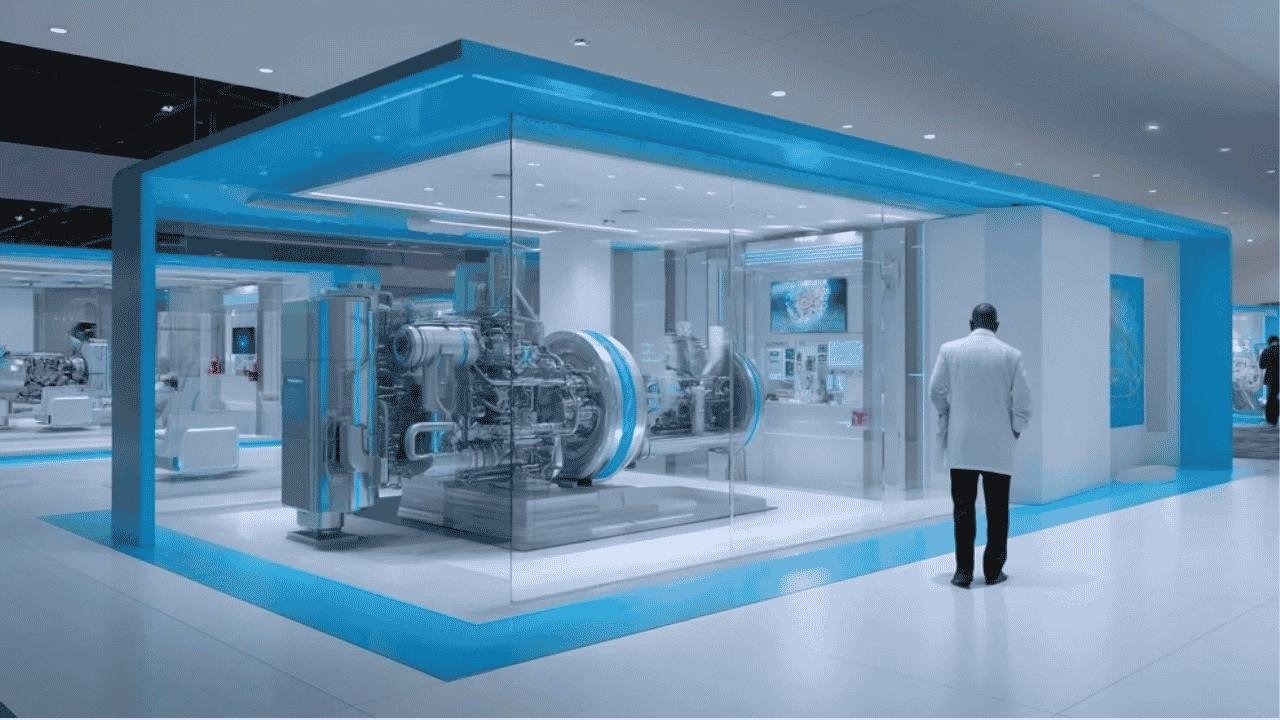
Picture this: You’re at a trade show with a 10-ton hydraulic press. You can’t bring it. Photos don’t do it justice. Technical specs put people to sleep.
Now imagine showing a 90-second animation that reveals every feature, safety mechanism, and operational benefit. People stop. They watch. They understand.
That’s the power of industrial 3D animation.
Industrial 3D animation services turn complex engineering into visual stories. They eliminate confusion. They cross language barriers. They close deals faster.
Studies show that people process visuals 60,000 times faster than text. For industrial products with intricate mechanisms, that speed is everything.
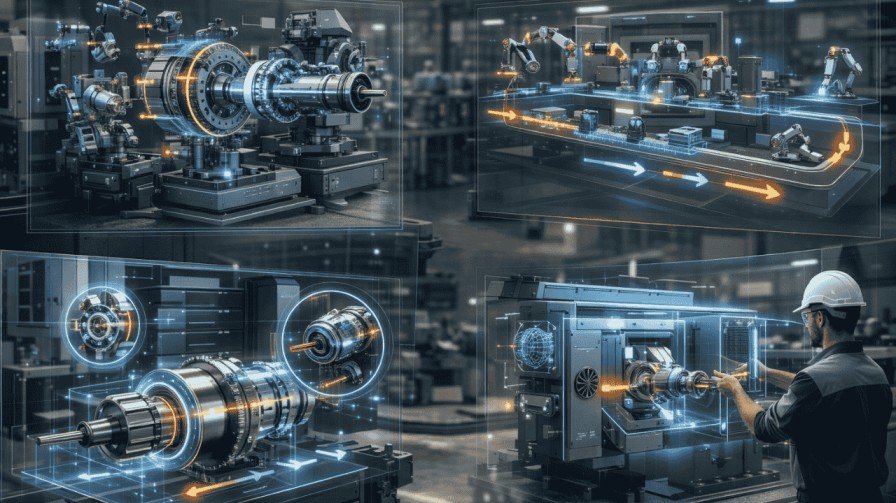
What Are the Main Types of 3D Animation for Industrial Use?
1. Product Animation: Show What Makes You Special
Product animation puts your machinery in the spotlight.
Think of it as your product’s digital showroom. It highlights features, demonstrates functions, and reveals competitive advantages—all without shipping heavy equipment worldwide.
Real example: A robotics manufacturer created a product animation for their new collaborative robot. Instead of expensive on-site demos, they sent the video. Sales inquiries jumped 45% in three months.
Best for:
- Product launches
- Sales presentations
- Trade show displays
- Investor pitches
You can rotate products 360 degrees, zoom into precision components, and show operations impossible to photograph. It’s like giving prospects X-ray vision.
2. Manufacturing Process Animation: Your Virtual Factory Tour
Want to show clients your production capabilities without disrupting operations?
Manufacturing process animation visualizes your entire workflow—from raw materials to quality control to finished products.
It’s particularly valuable for industrial manufacturing facilities that can’t easily accommodate visitor tours. Cleanrooms, hazardous areas, or high-security zones become accessible through animation.
Key benefits:
- Demonstrate production capacity
- Train new employees
- Document quality procedures
- Showcase automation systems
A pharmaceutical company used this approach to show their sterile manufacturing environment. Regulatory auditors could review processes without entering sensitive areas.
3. Industrial Equipment Animation: Technical Training Made Easy
This is where mechanical engineering meets visual education.
Industrial equipment animation dives deep into how machinery operates. It shows internal mechanisms, maintenance procedures, and troubleshooting steps.
CAD design files provide the foundation. Engineers supply specifications. Animators create accurate visualizations that demonstrate:
- Moving parts and mechanisms
- Assembly sequences
- Safety protocols
- Operational procedures
Real-world impact: An automotive supplier reduced equipment training time by 40% using detailed animations. New technicians understood complex systems faster with visual guides versus manuals alone.
4. Machinery Explainer Video: Simplicity Wins
Not everyone needs engineering-level detail.
A machinery explainer video breaks down complex equipment for non-technical audiences—procurement managers, executives, or end-users who need to understand value, not specifications.
What makes them work:
- Simple language
- Clear benefits
- Visual metaphors
- Concise delivery
Think of it as translating engineering into conversation. If your grandmother couldn’t understand it, the explainer needs work.
5. Factory Workflow 3D Animation: The Strategic Overview
Need to show how everything connects?
Factory workflow 3D animation presents your entire operational ecosystem. It visualizes material flow, manufacturing workflow coordination, and system integration.
This bird’s-eye perspective excels for:
- Product Lifecycle Management (PLM) presentations
- Facility planning
- Investor communications
- Efficiency optimization
A logistics company secured $3 million in funding using a workflow animation that showed their automated warehouse system. Investors saw the complete picture in minutes instead of hours of presentations.
6. Industrial Product Visualization: Market Before You Build
Here’s where industrial marketing animation gets exciting.
Industrial product visualization creates photorealistic renderings of products that don’t exist yet. You can market, test, and refine before manufacturing begins.
Perfect for:
- Pre-launch campaigns
- Design testing
- Customer feedback
- Prototype iteration
An agricultural equipment manufacturer saved $150,000 by testing three design variations with dealers using visualization. They identified the winning design before cutting metal.
How Do You Choose the Right Animation Type?
Ask yourself three questions:
What’s your goal?
- Selling products → Product animation
- Training teams → Equipment animation
- Attracting investors → Factory workflow
- General marketing → Explainer video
Who’s watching?
- Engineers → Technical equipment animation
- General buyers → Simplified explainer
- Executives → Workflow or process animation
- Mixed audience → Product visualization
What’s your budget?
- Starting out → Machinery explainer ($3,000-$8,000)
- Mid-range → Product animation ($8,000-$20,000)
- Comprehensive → Factory workflow ($25,000-$75,000)
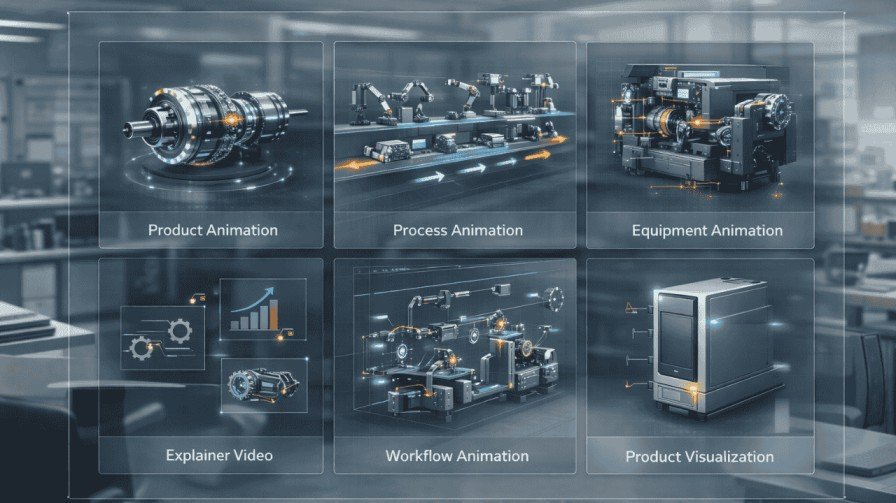
Quick Comparison: Which Type Fits Your Needs?
| Type | Best Use | Complexity | Timeline |
| Product Animation | Sales, launches | Medium | 2-4 weeks |
| Process Animation | Training, compliance | High | 4-8 weeks |
| Equipment Animation | Technical education | High | 3-6 weeks |
| Explainer Video | General marketing | Low | 1-3 weeks |
| Workflow Animation | Strategic planning | Very High | 6-12 weeks |
| Product Visualization | Pre-launch marketing | Medium | 2-6 weeks |
How Does Industrial 3D Animation Boost Marketing?
Let’s talk results.
Industrial 3D Animation Boosts Marketing in measurable ways:
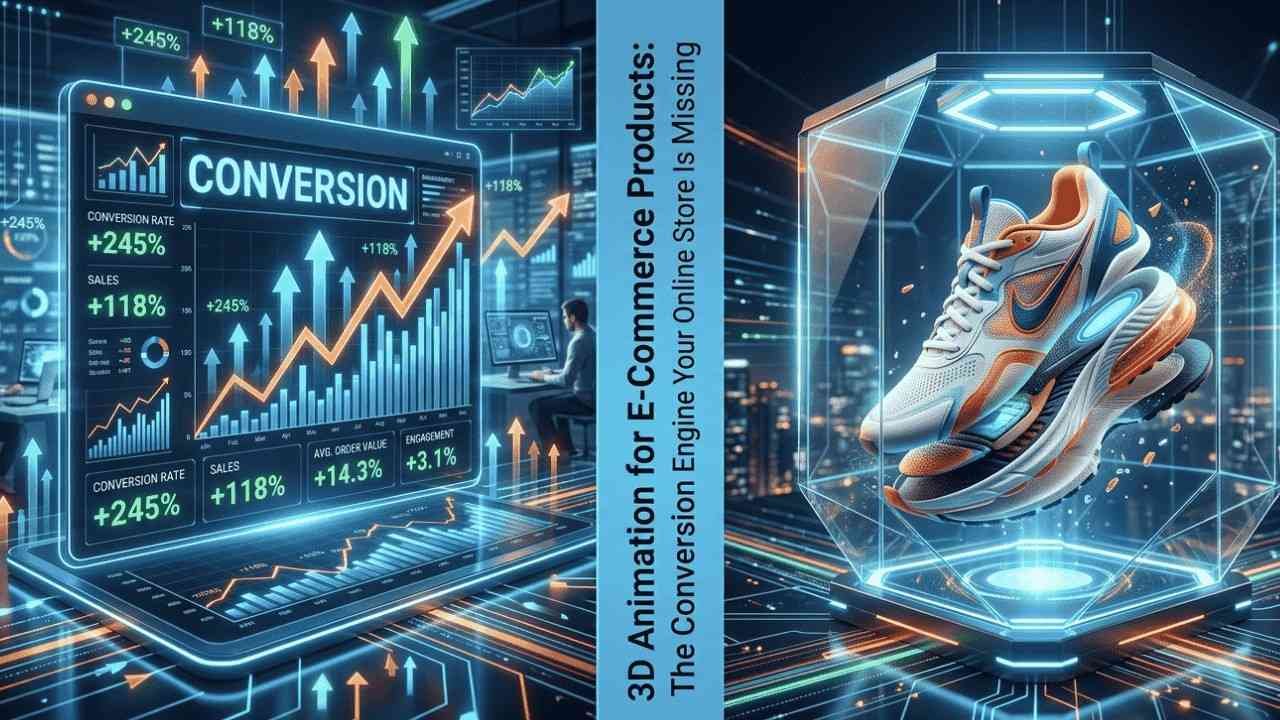
1. Conversion increases: Visual demonstrations convert 80% better than text descriptions alone.
2. Global reach: Language barriers disappear. Your animation works everywhere.
3. Faster sales: Complex approvals that took months now happen in weeks.
4. Trade show impact: Animations draw crowds that static displays can’t match.
5. Content leverage: One animation becomes dozens of marketing assets.
Want proof? Check out industrial 3d animation production example from companies transforming their sales process—the results speak clearly.
What Makes Industrial Animation Different?
Regular animation entertains. Industrial 3D animation educates and sells.
Every measurement must be exact. Every movement must reflect real physics. Every component must match actual specs.
Why such precision? Because million-dollar decisions depend on accuracy.
Industrial machinery animations require collaboration between engineers, animators, and subject experts. This ensures engineering visualization that’s both beautiful and technically correct.
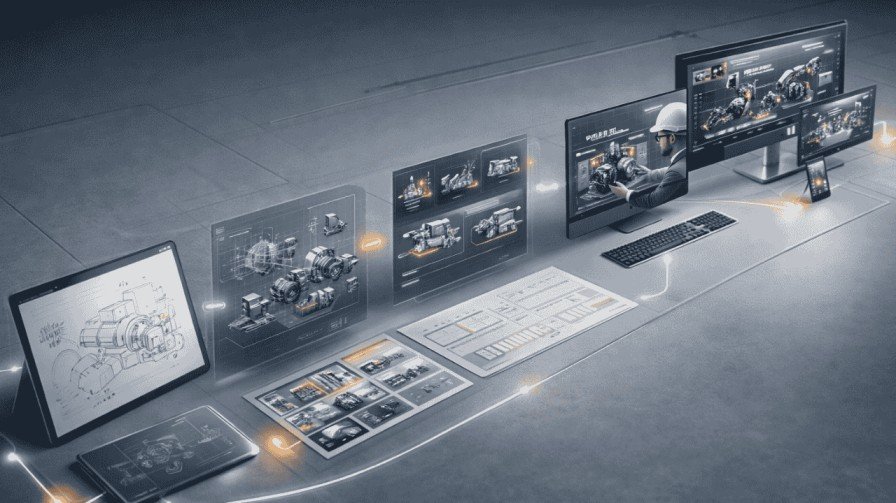
Step-by-Step: Getting Your First Animation
Step 1: Define your objective What problem are you solving? Be specific.
Step 2: Gather technical assets Collect CAD files, specs, and operational details.
Step 3: Choose your type Use the guide above to select the right approach.
Step 4: Script and plan Outline the story your animation will tell.
Step 5: Review for accuracy Have engineers verify every detail.
Step 6: Deploy strategically Create versions for different platforms.
Frequently Asked Questions
1. How much does industrial 3D animation cost?
Prices range from $3,000 for basic explainer videos to $50,000+ for complex factory workflows. Most product animations cost $8,000-$20,000. Complexity, length, and detail drive pricing.
2. How long does production take?
Simple animations need 2-4 weeks. Complex projects require 6-12 weeks. Your review process and technical complexity affect timeline.
3. Can animations be updated later?
Yes. Updates typically cost 30-50% less than creating new animations. Keep source files for easy modifications.
4. Do I need CAD files?
CAD files improve accuracy and reduce costs significantly. But animators can work from drawings or photos if necessary—it just costs more and takes longer.
5. Will technical buyers trust animation?
Absolutely—when it’s accurate. Technical audiences appreciate precision. Detailed equipment animations with correct specifications build credibility.
Final Thoughts
Different types of 3D animation for industrial companies serve different purposes.
Product animation showcases innovations. Process animation reveals efficiency. Equipment animation trains teams. Explainer videos simplify complexity. Workflow animations present strategy. Visualization markets the future.
The question isn’t whether you need industrial 3D animation—it’s which type serves your goals right now.
Start with one animation. Prove the value. Then expand.
The industrial leaders in your market aren’t necessarily better funded. They’re just better at communicating value.
And in 2025, that communication happens visually.
Your complex machinery deserves more than static photos. Your prospects deserve clarity. Your team deserves effective tools.
Ready to transform how you communicate? The technology exists. The expertise is available.
Will you lead or follow? All the best.