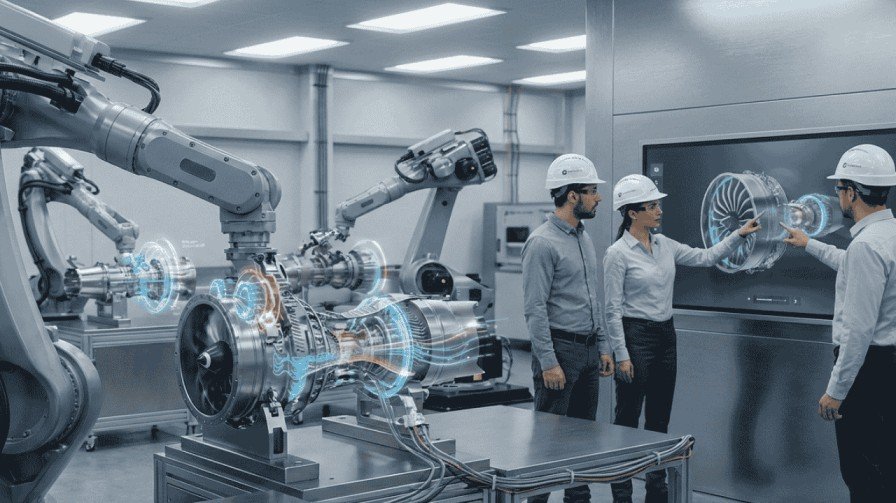
Ever tried explaining how a hydraulic press works using just words? It’s like trying to describe the color blue to someone who’s never seen it.
That’s exactly the challenge manufacturers face every day. Your products are complex. Your buyers are busy. And your competitors? They’re still using PDF brochures from 2015.
Here’s the game-changer: industrial 3D animation for manufacturing isn’t just a fancy visual tool anymore. It’s become the bridge between your engineering brilliance and your customer’s “aha!” moment.
Let me show you how it transforms manufacturing marketing from forgettable to unforgettable.
What Makes Industrial 3D Animation Different?
Think of traditional product photography as a postcard. Nice to look at, but flat.
Industrial 3D animation is like handing someone a VR headset to your factory floor.
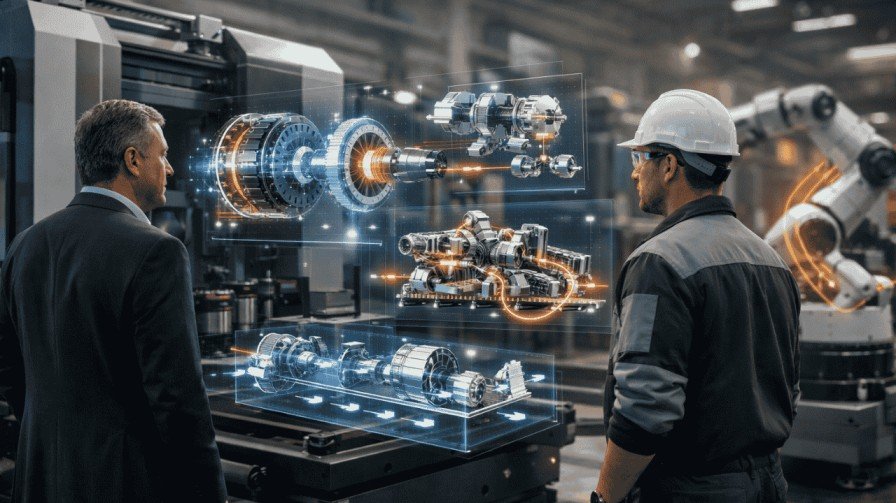
It uses Computer-Generated Imagery (CGI) to create dynamic visuals that show exactly how your machinery moves, assembles, or operates. We’re talking about exploded views of complex equipment, step-by-step assembly processes, and internal mechanisms that no camera could ever capture.
Unlike video, these animations can:
- Pause time to highlight critical components
- Show invisible forces like airflow or pressure
- Rotate products 360 degrees
- Zoom into micro-level details
It’s product visualization on steroids.
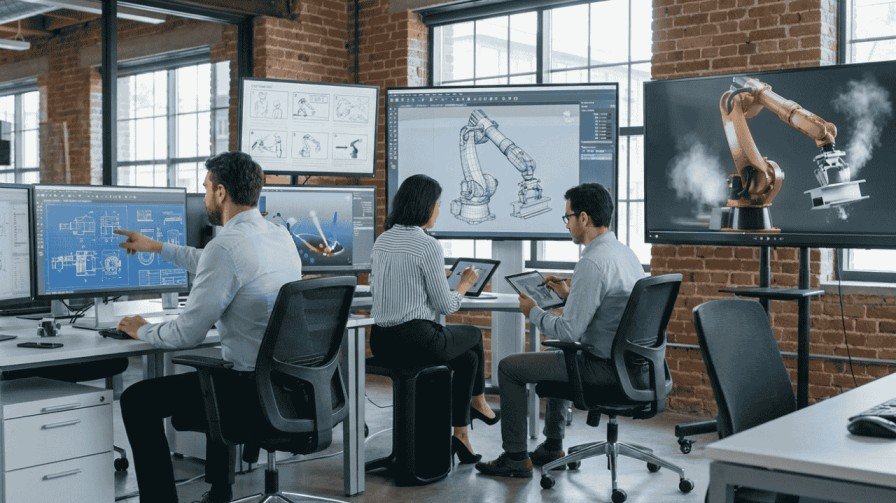
Why Manufacturing Companies Can’t Ignore This Anymore
Let’s be honest. Your buyers aren’t reading 50-page technical manuals anymore.
They’re scrolling LinkedIn during lunch breaks. They’re comparing vendors on mobile devices. They’re making million-dollar decisions based on what they can understand in 90 seconds.
Here’s what 3D product animation for industrial equipment delivers:
1. Clarity That Sells
When a procurement manager watches your animation, they immediately grasp what took three sales meetings to explain before. The learning curve? Gone.
2. Trust Through Transparency
Showing the internal workings builds credibility. You’re not hiding anything. Every gear, valve, and circuit is visible. That’s powerful in B2B marketing where trust equals contracts.
3. Speed to Decision
A 60-second animation can compress weeks of back-and-forth emails into one shared link. Decision-makers get aligned faster when everyone sees the same clear picture.
Where Industrial 3D Animation Crushes Traditional Marketing
Let me paint you a comparison:
| Traditional Approach | 3D Animation Approach |
| Static CAD drawings | Interactive 360° views |
| Physical prototypes shipped | Digital demos sent instantly |
| Technical jargon overload | Visual storytelling |
| One-size-fits-all brochure | Customizable presentations |
| Trade show booth limitations | Looping demos on any screen |
The difference? Manufacturing marketing with 3D visuals meets buyers where they are: online, mobile, and expecting instant clarity.
Real-World Applications That Drive Results
Wondering how this actually works in practice? Here are scenarios happening right now:
1. Product Launches Without Physical Samples
A German automation company launched their new robotic arm across three continents. Instead of shipping prototypes, they sent a 3D animation showing assembly, operation, and maintenance.
Result? 40% faster sales cycle.
2. Training That Actually Sticks
An HVAC manufacturer replaced thick training manuals with animated safety procedures. New technicians could see danger zones and proper protocols in action.
Accidents dropped. Confidence soared.
3. Trade Shows That Stand Out
Picture this: while competitors hand out flyers, your booth displays a mesmerizing loop of your production line. Attendees stop. They watch. They ask questions.
That’s the magnetic pull of industrial product visualization services.
4. Investor Pitches That Close Funding
Startups in the manufacturing industry use 3D animations to show prototypes that don’t physically exist yet. Investors can visualize the end product, understand the innovation, and write checks.
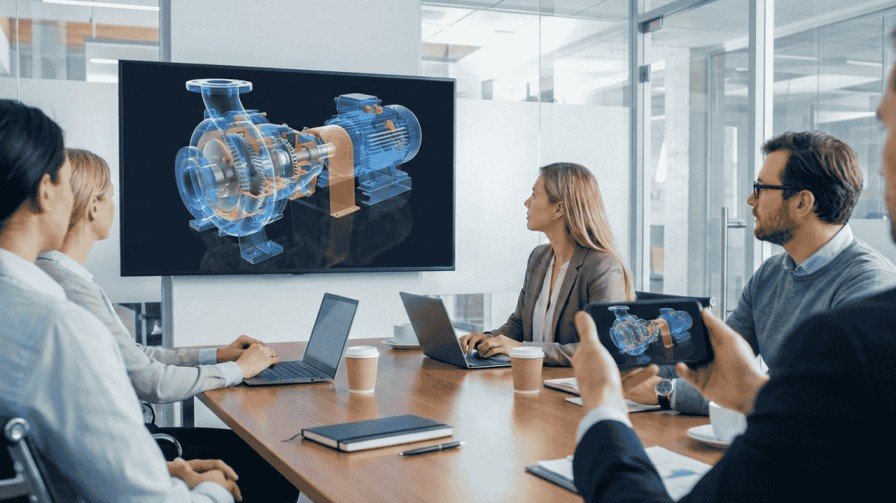
How Does 3D Animation Actually Get Made?
You might think it’s rocket science. It’s more like organized creativity.
Here’s the typical process:
Step 1: Discovery Call
Your team shares CAD files, technical specs, and marketing goals. What problem are we solving? Who needs to understand this?
Step 2: Storyboarding
Animators map out the visual flow. Which angles matter? What sequence makes sense? This is where engineering meets storytelling.
Step 3: 3D Modeling
Every component gets built digitally. Textures, colors, materials—everything matches reality.
Step 4: Animation & Physics
Movement gets added. If it rotates in real life, it rotates on screen. If hydraulics compress, the animation shows that pressure.
Step 5: Polish & Delivery
Voiceovers, music, and final touches. You receive files ready for websites, presentations, or social media.
Total timeline? Usually 2-6 weeks depending on complexity.
What’s the Investment Looking Like?
Let’s talk numbers without dancing around them.
A basic 3D animation for factories and production processes starts around $2,000-$5,000 for a 30-second explainer.
More complex projects—think full assembly sequences or multiple product variations—can range from $8,000 to $20,000+.
Expensive? Maybe. But compare that to:
- Shipping physical demos internationally: $3,000+ per trip
- Redesigning brochures every product update: $1,500+ each time
- Lost deals because buyers didn’t “get it”: Priceless (and painful)
One animation gets reused across your website, sales decks, email campaigns, and trade shows for years. The ROI compounds.
Can Small Manufacturers Afford This?
Absolutely. You don’t need a Hollywood budget. Start small:
- Create one hero animation for your flagship product
- Use it in every marketing channel
- Measure the impact on engagement and conversions
- Scale from there
Many studios offer tiered packages. Some even work with startups on flexible payment terms.
The real question isn’t “Can we afford it?” It’s “Can we afford NOT to stand out in a crowded market?”
How Do You Choose the Right Animation Partner?
Not all 3D studios understand industrial equipment like they should.
Here’s your vetting checklist:
1. Do they have manufacturing experience?
Ask for portfolio pieces in your industry. Generic animation skills don’t translate to technical accuracy.
2. Can they work with your CAD files?
If they need to recreate everything from scratch, costs skyrocket. Find partners who import and optimize existing models.
3. Do they ask good questions?
Great studios dig into your buyer’s journey, pain points, and goals. They’re not just animators—they’re marketing partners.
4. What’s their revision policy?
Technical products need precision. Make sure you get 2-3 revision rounds included.
What Results Should You Actually Expect?
Let’s set realistic expectations. You won’t suddenly 10x your revenue overnight. But here’s what companies typically see:
- Higher engagement rates: Website visitors spend 2-3x longer on pages with animation
- Faster sales cycles: Fewer clarification meetings needed
- Better qualified leads: Prospects who watch your animation already understand the value
- Increased shareability: Sales teams love sending visual links vs. PDF attachments
One aerospace component manufacturer reported that 68% of their enterprise deals now include their 3D animation in the proposal. Why? Because it works.
Does This Work for Every Manufacturing Product?
Almost.
If your product has moving parts, assembly steps, or internal mechanisms, animation is a slam dunk.
Even static products benefit. Imagine showing:
- Material composition layers
- Stress testing simulations
- Installation processes
- Size comparisons at scale
The only exception? Commodities where differentiation is purely price-based. If you’re selling generic bolts, animation might be overkill.
How Do You Maximize Your Animation Investment?
Creating the animation is step one. Here’s how to squeeze every drop of value:
1. Chop It Into Micro-Content
That 90-second animation? Cut it into:
- 6-second loops for Instagram
- 15-second teasers for LinkedIn
- 30-second versions for YouTube pre-roll ads
2. Embed Everywhere
Homepage hero section. Product pages. Email signatures. Proposal decks. Sales follow-ups.
3. Enable Your Sales Team
Give them trackable links. When prospects watch, sales gets notified. That’s your cue to follow up while interest peaks.
4. Repurpose for Training
Internal teams need product knowledge too. Animation shortens onboarding time for new reps.
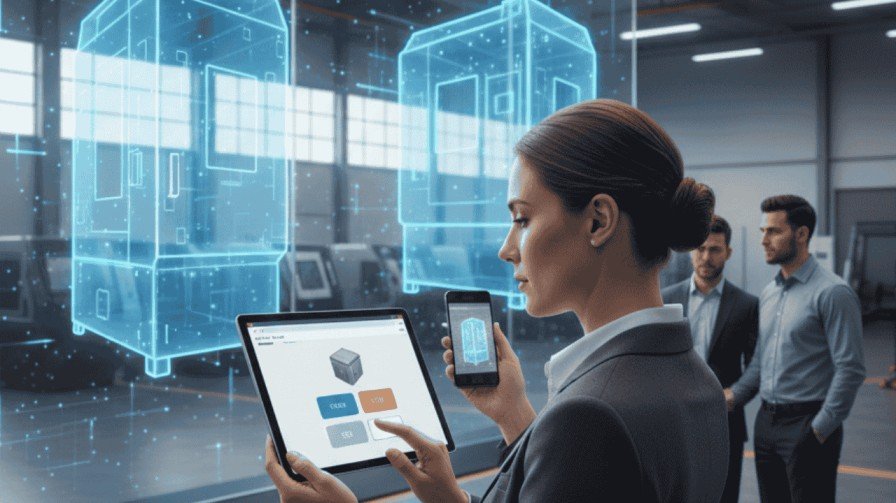
What’s the Future Looking Like?
We’re entering the era of interactive 3D.
Soon, buyers will manipulate animations in real-time—change colors, swap components, test configurations—all in their browser.
1. Augmented reality (AR) will let customers place your industrial equipment in their actual factory space using their phone.
2. Virtual reality (VR) showrooms will replace physical trade show booths entirely.
Early adopters in the manufacturing industry are already testing these waters. The technology’s here. The question is: when will you jump in?
Frequently Asked Questions
1. How long does it take to create an industrial 3D animation?
Most projects take 3-6 weeks from concept to final delivery. Rush projects can be done in 2 weeks, but expect premium pricing. Complex machinery with hundreds of parts might need 8-10 weeks.
2. Can animations be updated when products change?
Yes! That’s a huge advantage. Unlike video reshoots, tweaking a 3D model is relatively quick. Many studios offer update packages for 20-30% of the original cost.
3. Do we need to provide CAD files?
It helps tremendously and reduces costs. But if you don’t have them, studios can model from photos, drawings, or physical samples. Just know it’ll take longer.
4. Will this work for B2B marketing specifically?
Absolutely. B2B buyers are actually more receptive because they’re solving complex problems. Animation cuts through technical noise faster than any other medium.
5. Can we use the same animation for different audiences?
Smart question. You can, but consider creating versions. Engineers might want technical depth. Executives want ROI clarity. One master animation with tailored edits works best.
Related Reads:
What Is Industrial 3D Animation?
What Is Apple Style 3D Animation?
Final Thoughts
Here’s the reality check. Your competitors are already exploring this. Some have already launched their first animations. The gap between “early adopter” and “playing catch-up” is narrowing fast.
Industrial 3D animation isn’t experimental anymore. It’s table stakes for manufacturers who want to communicate value in a world that scrolls, scans, and decides in seconds.
You’ve got two paths: Keep explaining your brilliant products the hard way—and watching buyers tune out. Or show them. Clearly. Compellingly. Memorably.
The technology exists. The ROI is proven. The only question left is: when do you start?
Because in manufacturing marketing, the companies that can explain their value fastest win the deal. And nothing explains faster than seeing it in motion.
Ready to visualize your industrial products in 3D? Start with one animation. Watch what happens. Then scale from there. The future of manufacturing marketing isn’t written in manuals—it’s shown in motion.