Hello! As you’re chatting with a friend about your most beloved film, imagine that this film doesn’t end just by what is seen on the film; the narrative carries over into a comic book; video game; or into your social-networking account. Transmedia storytelling is the magic of all these different mediums connected through one larger narrative story arc. Think of transmedia storytelling as a puzzle with the numerous pieces located on different tables that must be put together to create the overall image. If you’re wondering about the definition of transmedia storytelling or interested in the many transmedia storytelling examples, you’ve come to the right place! Let’s break down transmedia storytelling together over some coffee while we get excited about these epic stories.
In this post, I’ll explain the transmedia storytelling definition, share real-life transmedia storytelling examples, and show how it builds immersive worlds. We’ll cover everything from basics to tips, all in a way that’s easy to follow. By the end, you’ll see why this storytelling technique is a game-changer for creators and fans alike.
What Is Transmedia Storytelling?
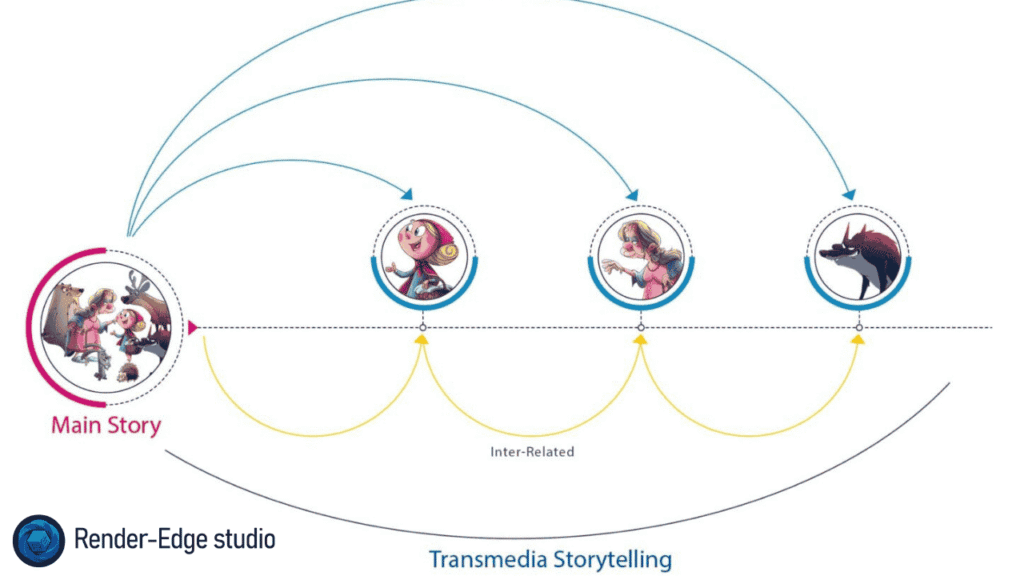
Picture this: You’re not just watching a story; you’re living it across different spots. What is transmedia storytelling? It’s a way to tell one big tale using multiple platforms, where each adds something fresh. Unlike a book turned into a movie that repeats the same plot, transmedia expands the universe.
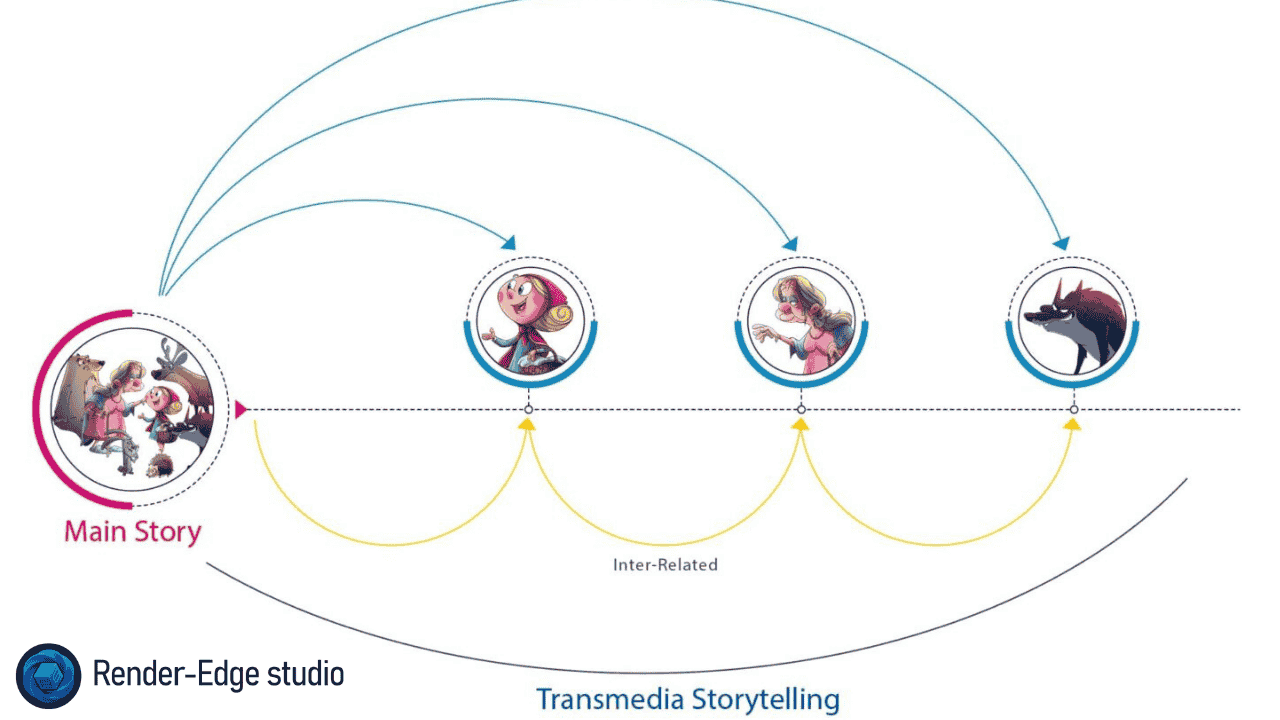
Think of it as a tree. The trunk is the main story, but branches spread out into games, podcasts, or apps. Each branch grows the world without repeating the trunk. This cross-platform storytelling keeps fans hooked, turning passive viewers into active explorers.
Henry Jenkins, the guy who popularized this idea, calls it a “unified and coordinated entertainment experience.” He says integral elements get dispersed across channels. So, if you’re into narrative across media, transmedia narrative is your jam.
The Transmedia Storytelling Definition: Breaking It Down
Let’s get precise. The transmedia storytelling definition? It’s storytelling where a single narrative unfolds over various media, and each piece contributes uniquely to the whole. No one platform tells the full story; you need them all for the complete vibe.
For example, a film might show the hero’s quest, while a web series dives into a side character’s backstory. This multi-platform content creates depth. It’s not just repackaging; it’s expanding.
Why does this matter? In our digital world, people bounce between devices. Transmedia meets them there, making stories feel alive and interactive.
How Does Transmedia Differ from Traditional Storytelling?
Ever read a book and then watch its movie adaptation? That’s traditional – one story, one medium, maybe adapted to another. But transmedia? It’s like upgrading from a solo hike to a group adventure.
In traditional storytelling, the audience sits back. Transmedia invites them to join in. You might solve puzzles in a game that affect the TV show’s plot. This shift boosts engagement.
Take cross-platform storytelling: It uses each medium’s strengths. Films for visuals, books for depth, social media for real-time buzz. Traditional sticks to one lane; transmedia weaves through many.
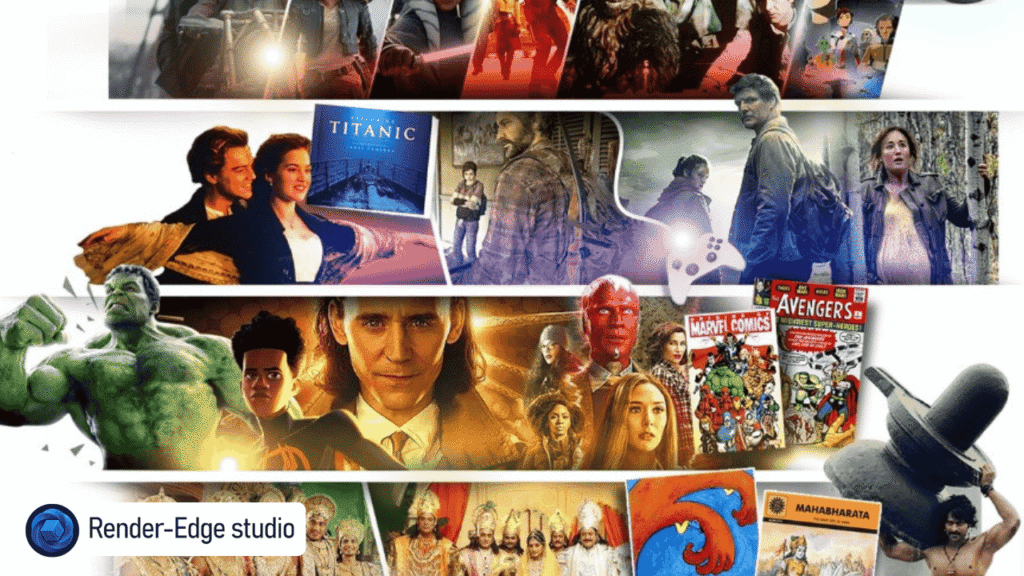
One tale, many lives: Inside the worlds of transmedia storytelling | Hindustan Times
Key Principles of Transmedia Narrative
Henry Jenkins laid out some core rules. Let’s list them out simply:
- Spreadability: Easy to share bits across social media.
- Drillability: Deep dives for superfans, like hidden lore.
- Continuity: The world stays consistent, no plot holes.
- Multiplicity: Different views of the same events.
- Immersion: Fans feel inside the story.
- Worldbuilding: A rich universe that holds endless tales.
These storytelling techniques make transmedia narrative pop. Apply them, and your story becomes a living ecosystem.
Benefits of Using Transmedia Storytelling
Why bother with this? Simple: It supercharges engagement. Fans stick around longer, exploring every nook.
First, it reaches more people. Not everyone watches movies, but some play games or read comics. Multi-platform content casts a wider net.
Second, it builds loyalty. When fans piece together the narrative across media, they own it. That creates buzz and word-of-mouth gold.
Third, for creators, it opens revenue streams. Merch, spin-offs, events – the sky’s limit.
In marketing, brands use it to connect emotionally. Think of it as turning customers into story co-authors.
Step-by-Step Guide: How to Create Your Own Transmedia Campaign
Ready to try? Here’s a simple guide. Think of it as building a Lego set – start with the base, add pieces.
- Build Your World Bible: Create a doc with rules, history, characters. This keeps everything consistent.
- Map the Story Arcs: Decide what goes where. Main plot in film? Backstories in books?
- Choose Platforms Wisely: Match content to medium. Interactive media for games, visuals for animation.
- Engage Fans Early: Tease clues on social. Encourage fan art or theories.
- Launch and Iterate: Release pieces over time. Watch feedback, adjust.
- Measure Success: Track engagement, shares, sales.
Follow these, and your transmedia narrative will thrive.
Transmedia Storytelling Examples: Real-World Hits
Now, the fun part: transmedia storytelling examples. These show how it works in action.
1. Star Wars Franchise: A Galaxy Far, Far Away
Star Wars is a classic. The films tell core tales, but books explore Jedi history, games let you battle as a Sith, and comics fill gaps.
Remember The Mandalorian? It expands the universe on TV, tying into movies. Fans hunt Easter eggs across media. This cross-platform storytelling keeps the franchise alive for decades.
One real-life win: During lockdowns, fans binged shows, read novels, and played games – all in one world. It boosted Disney’s streams big time.
The fun of exploring the Star Wars Transmedia franchise | by Sam Edwards | Medium
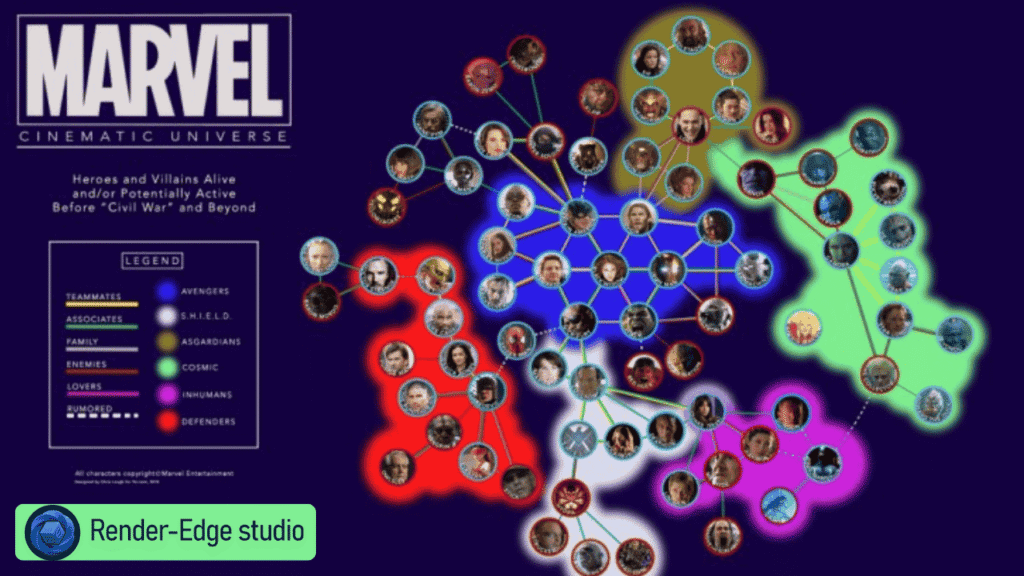
2. Marvel Cinematic Universe (MCU): Heroes United
The MCU nails transmedia storytelling examples. Movies like Avengers connect, but TV shows like WandaVision add layers. Comics provide origins, games let you swing as Spider-Man.
It’s a web of stories. Miss a show? You might miss a plot twist in the next film. This narrative across media builds hype.
Real example: Endgame’s buildup spanned years and platforms. Fans debated theories online, boosting engagement. Box office? Over $2 billion.
3. Other Transmedia Storytelling Examples
Pokemon: Games core, anime adventures, cards for battles. It’s endless fun.
The Last of Us: Game to HBO series, expanding emotional depth.
For 2025 vibes, look at brands like Nike. Their campaigns span ads, apps, social – telling athlete stories across media.
These transmedia storytelling examples prove it works for entertainment and marketing.
Transmedia in Animation and Interactive Media
Animation loves transmedia. Why? It’s visual and flexible.
Take The Animatrix: Shorts expand The Matrix world. Or Harry Potter sites with interactive games.
In 3D Animation, creators build worlds fans explore. Think easy animation ideas like stop motion animation ideas for fan content.
Fun facts about animation: It started simple, but now blends with games. 3D character art styles vary – realistic for MCU ties, cartoony for Pokémon.
Interactive media amps it up. AR apps let you enter the story. This multi-platform content makes animation immersive.
Transmedia Storytelling, Complete Guide (Theory to practice) +Examples
Challenges in Transmedia Storytelling
Not all smooth. Keeping consistency? Tough with teams.
Audience might miss pieces, feeling lost. Solution: Make each standalone yet connected.
Costs add up. Start small, scale up.
Intellectual property? Clear rights from the start.
Overcome these, and your story soars.
Future Trends in Multi-Platform Content
Looking ahead to 2025 and beyond? AI helps generate personalized paths. VR/AR for deeper immersion.
Metaverses as hubs for stories. Brands will dive in more.
Storytelling techniques evolve, but core? Engaging fans across media.
Key Takeaways
- Transmedia builds rich worlds via cross-platform storytelling.
- Examples like Star Wars and MCU show massive success.
- Use steps to create your own.
- Animation and interactive media enhance it.
FAQs About Transmedia Storytelling
1. What Is Transmedia Storytelling in Simple Terms?
It’s telling one story across many platforms, each adding unique bits.
2. Can You Give More Transmedia Storytelling Examples?
Sure! Beyond Star Wars and MCU, try The Witcher: Books, games, Netflix show.
3. How Does Transmedia Help Brands?
It creates emotional ties, boosting loyalty and reach.
4. What’s the Difference Between Transmedia and Multimedia?
Multimedia combines formats in one spot; transmedia spreads narrative across many.
5. Is Transmedia Good for Animation?
Absolutely! It expands worlds with 3D Animation and fun facts about animation.
Wrapping Up: Why Transmedia Matters Now
So, we’ve covered what is transmedia storytelling, its definition, and killer transmedia storytelling examples. It’s like a conversation that never ends – jumping from screen to page to game.
Whether you’re a creator eyeing 3D character art styles or a fan loving interactive media, transmedia narrative changes the game. Try it out. Who knows? Your story could be the next big universe.