The global 3D animation market was valued at over $21 billion in 2023 and is projected to exceed $47 billion by 2030. Behind every AAA game, blockbuster animated film, and immersive metaverse avatar lies a foundational decision that shapes the entire production pipeline — the choice of 3D character art style.
This isn’t a cosmetic choice. It determines your budget, your toolchain, your rendering performance, your audience reach, and ultimately, whether your character resonates or gets ignored. This guide breaks down every major 3D character art style, the techniques behind them, and a practical framework to help you make the right call.
What Are 3D Character Art Styles?
3D character art styles are defined visual languages that govern how a digital character is modeled, textured, lit, and rendered. Unlike 2D character styles, which exist flat on a canvas, 3D styles occupy virtual space — which means every decision about topology, surface material, and lighting has compounding consequences on performance and visual fidelity.
The core technical pillars of any 3D character style are:
- Modeling — geometry construction and polygon density
- Texturing — surface detail through maps (diffuse, normal, roughness)
- Lighting — how light interacts with the surface
- Rendering — the final output pipeline, from ray tracing to NPR
Understanding Physically Based Rendering (PBR) is essential here. PBR is a rendering approach that simulates real-world light physics, and it’s become the industry standard across realistic and semi-realistic pipelines.
Main Categories of 3D Character Art Styles
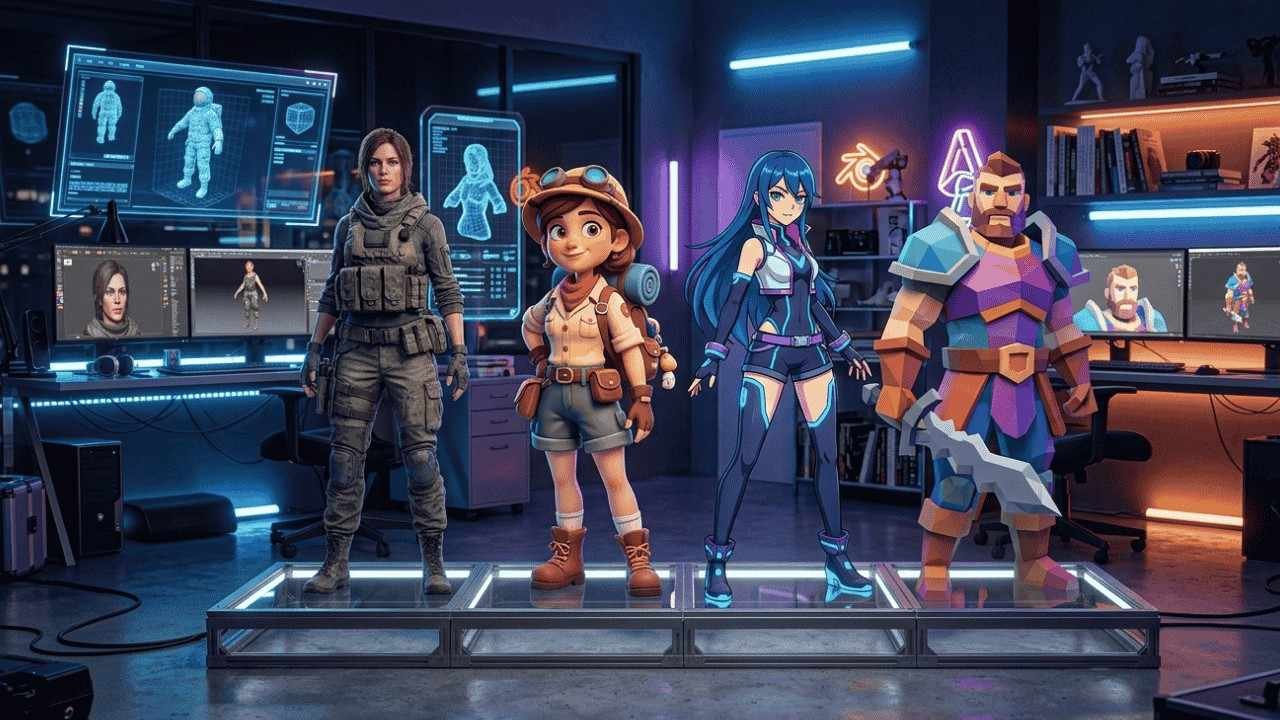
At the highest level, all 3D character design styles fall into two broad camps: realistic and stylized. Everything else is a spectrum in between.
Realistic 3D Character Styles
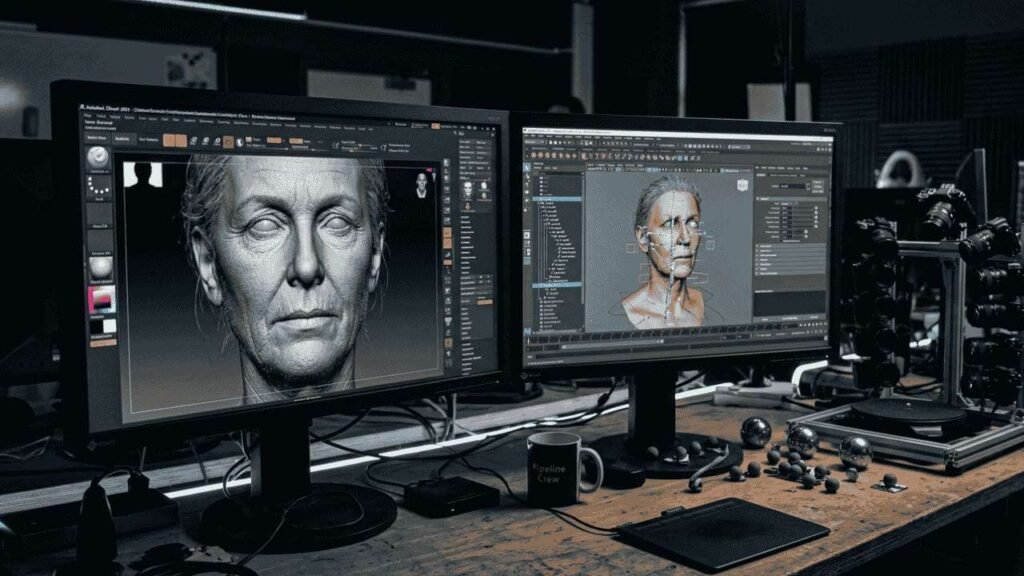
Realistic characters aim to replicate human anatomy, skin microsurface detail, subsurface scattering, and anatomically accurate proportions. The workflow is demanding — artists rely on ZBrush for high-poly sculpting, Autodesk Maya for rigging, and PBR textures baked down to game-ready meshes.
The Last of Us Part II is the benchmark here. Naughty Dog’s character pipeline used photogrammetry data, multi-layer skin shaders, and motion-captured facial performances to achieve near-cinematic fidelity. The result? Emotionally devastating storytelling enabled partly by technical authenticity.
Best for: AAA games, feature films, cinematic cutscenes. Cost: High. Performance demand: Very heavy.
Stylized 3D Character Styles
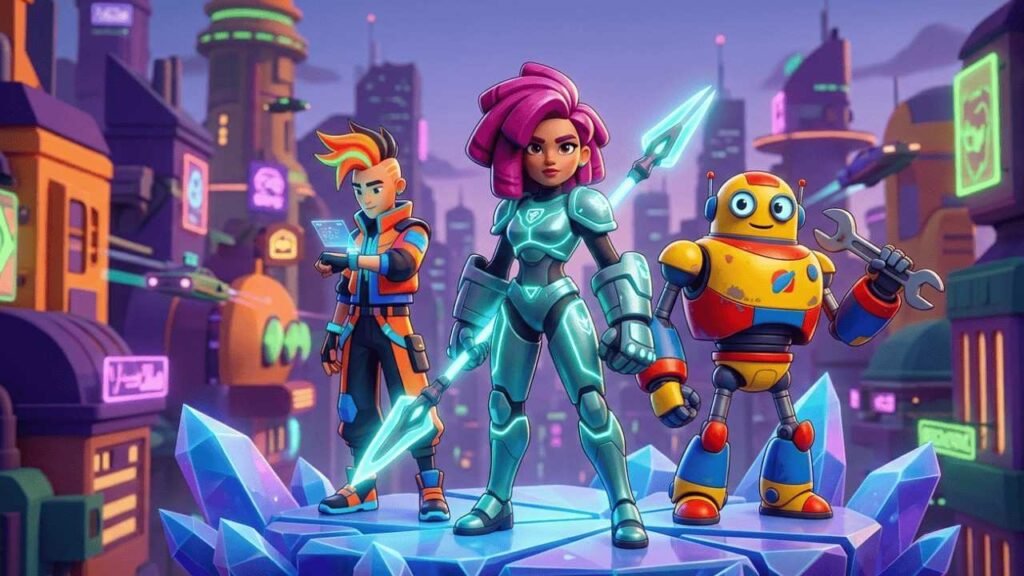
Stylized characters intentionally deviate from realism in favor of artistic expression — exaggerated proportions, simplified geometry, bold color palettes. The creative freedom here is enormous, and so is the commercial value.
Fortnite‘s art direction is the case study every studio references. Epic Games built a global cultural phenomenon on stylized character design — a style flexible enough to absorb Marvel superheroes, Eminem, and NFL players without visual dissonance.
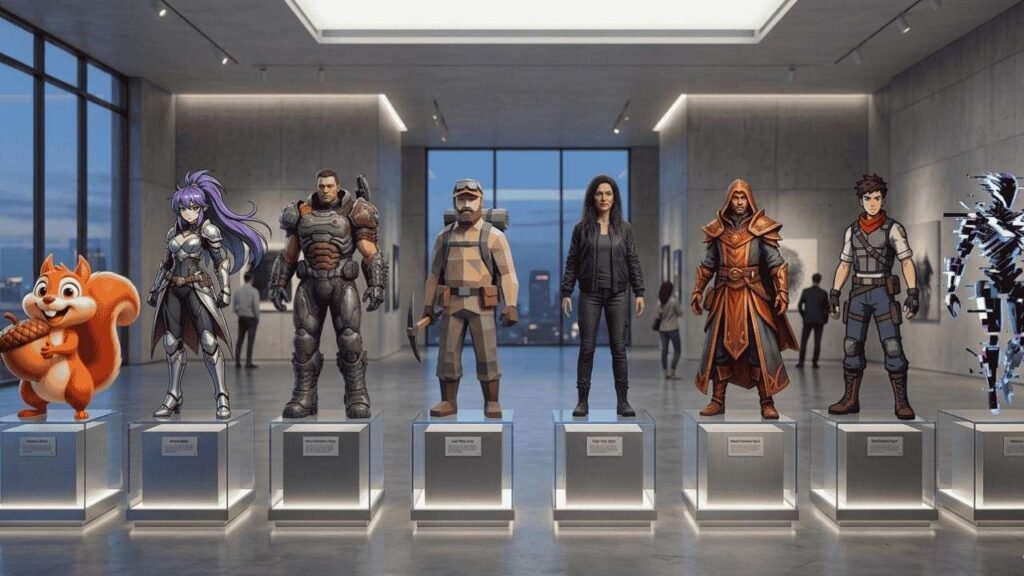
Types of 3D Character Art Styles: Detailed Breakdown
Cartoon / Toon Style
Rooted in classic animation principles — squash and stretch, exaggerated shape language, high-saturation palettes. Cartoon 3D characters prioritize expressiveness over anatomy. Think rounded limbs, oversized heads, and fluid deformation rigs.
Anime-Inspired 3D Style
This style bridges the visual vocabulary of 2D Japanese animation into three-dimensional space — stylized facial proportions, large eyes, sharp silhouettes, and expressive cel-like shading. Genshin Impact by miHoYo is the most technically sophisticated example, blending real-time anime rendering with open-world scale production. The game’s character shader system is a masterclass in Non-Photorealistic Rendering (NPR).
Semi-Realistic Style
One of the most commercially dominant styles in modern games, semi-realistic sits at the intersection of believability and artistic control. Characters read as human without the extreme technical overhead of hyperrealism. Studios choose this style when they want emotional grounding without photogrammetry pipelines.
Low Poly Style
Defined by intentional polygon minimalism — geometric facets visible, no smooth shading illusions. What it lacks in fidelity it gains in performance, charm, and development speed. Critically important for mobile games and indie projects where triangle budgets are tight.
The key LSI distinction: low poly vs high poly character design isn’t just aesthetic — it’s an architectural decision that affects your entire asset pipeline, LOD strategy, and platform targets.
High Poly / Hyper-Realistic Style
Film-quality characters built for pre-rendered content — visual effects, cinematics, product visualization. Pixar Animation Studios operates at this level, where a single character can contain millions of polygons with simulation-driven hair and cloth. Not real-time. Not cheap.
Hand-Painted Style
A criminally underrated approach: artists manually paint texture details directly onto UV maps, replacing photographic realism with deliberate, stylized brushwork. The result is warm, distinctive, and visually cohesive — World of Warcraft defined this aesthetic for an entire generation of MMO players.
Cel-Shaded (Toon Shading)
Cel shading uses flat color regions and hard-edge lighting to simulate the look of hand-drawn animation in 3D space. It’s a rendering technique as much as an art style — achieved through NPR shaders rather than geometric decisions. The flat aesthetic reads clearly at distance and scales beautifully to smaller screens.
Abstract / Experimental Styles
Increasingly visible in indie games and digital art — characters that abandon anatomical logic entirely in favor of geometric abstraction, glitch aesthetics, or procedural deformation. As GPU capabilities grow and creative tooling democratizes, expect this category to expand significantly.
3D Character Modeling & Texturing Techniques
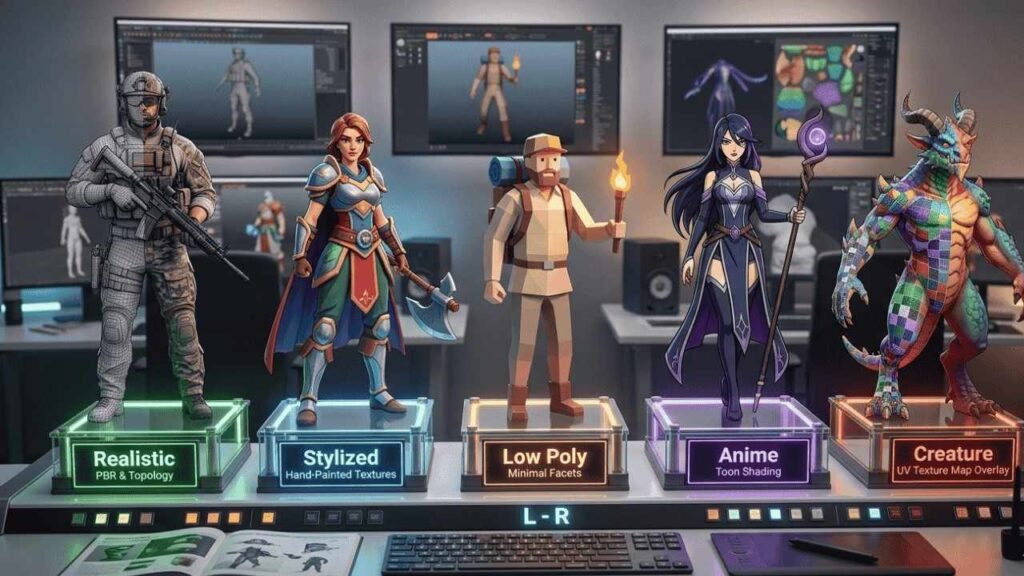
The visual output of any style depends on disciplined technical execution. Here’s how the pipelines diverge:
| Style | Modeling Approach | Texturing Method | Rendering |
| Realistic | Complex topology, edge loops | PBR textures | Ray tracing |
| Stylized | Simplified geometry | Hand-painted or stylized PBR | NPR or standard |
| Low Poly | Minimal polygons | Flat color or basic diffuse | Real-time rasterization |
| Anime | Moderate poly, sharp silhouettes | Stylized maps + toon shaders | NPR (custom shaders) |
| Hand-Painted | Medium complexity | Full hand-painted diffuse | Standard lit or NPR |
PBR vs hand-painted textures represents a genuine philosophical divide in 3D character design. PBR textures simulate physical material properties (metalness, roughness, ambient occlusion) and respond dynamically to lighting. Hand-painted textures embed the lighting information directly into the texture — beautiful, stylized, but less adaptive to dynamic lighting environments.
Industry tools: Blender (open-source, increasingly industry-standard), Autodesk Maya (rigging and animation pipeline), ZBrush (sculpting and high-poly detailing) — these three form the backbone of most professional 3D character workflows.
How to Choose the Right 3D Character Art Style
This is where strategy separates competent studios from excellent ones.
1. By project type: Games need real-time optimized assets. Films can afford offline rendering. Marketing content needs fast turnaround. Match the pipeline to the delivery format.
2. By budget: Low poly and stylized styles reduce modeling, texturing, and rendering costs significantly. Realistic styles demand senior artists, specialized tools, and longer timelines. A realistic character can cost 5–10x more to produce than a stylized equivalent.
3. By platform: Mobile platforms impose strict polygon and texture memory budgets — stylized or low poly wins here. PC and console give headroom for semi-realistic to realistic approaches.
4. By audience: Children’s content benefits from cartoon or stylized warmth. Mature narrative experiences leverage realism for emotional impact. Gacha and RPG audiences respond strongly to anime-inspired design.
5. By production timeline: Stylized characters reach production faster. Realistic pipelines require iterative sculpting, retopology, baking, and shader tuning — a single hero character can take weeks.
Real-World Use Cases
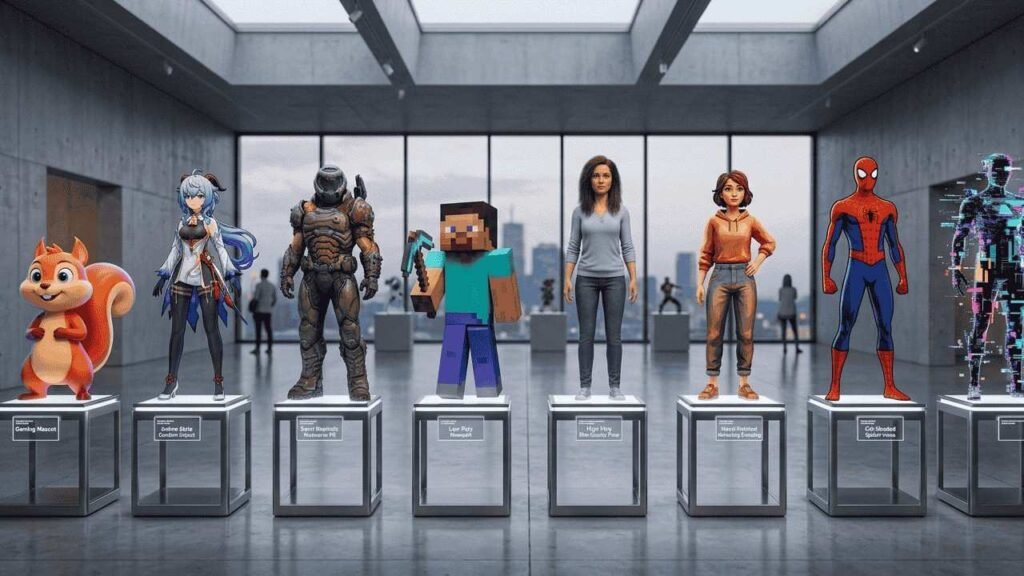
- Gaming: Fortnite (stylized), The Last of Us Part II (realistic), Genshin Impact (anime NPR), Minecraft (abstract low poly)
- Film & Animation: Pixar (high poly pre-render), Spider-Man: Into the Spider-Verse (experimental NPR)
- Marketing & Branding: Virtual mascots, brand avatars, product visualization
- Metaverse & VR: Optimized stylized characters designed for real-time social platforms
- Medical & Education: Semi-realistic anatomical models for training simulations
Common Mistakes When Choosing a Character Style
- Choosing style before considering platform constraints — beautiful realistic characters that can’t run on target hardware.
- Ignoring audience expectations — mismatched tone between character aesthetic and game genre.
- Inconsistent style mixing — blending realistic faces with cartoon bodies creates uncanny valley without artistic intent.
- Scope creep through style escalation — starting stylized, then pushing toward realism mid-production destroys timelines.
Future Trends in 3D Character Art Styles
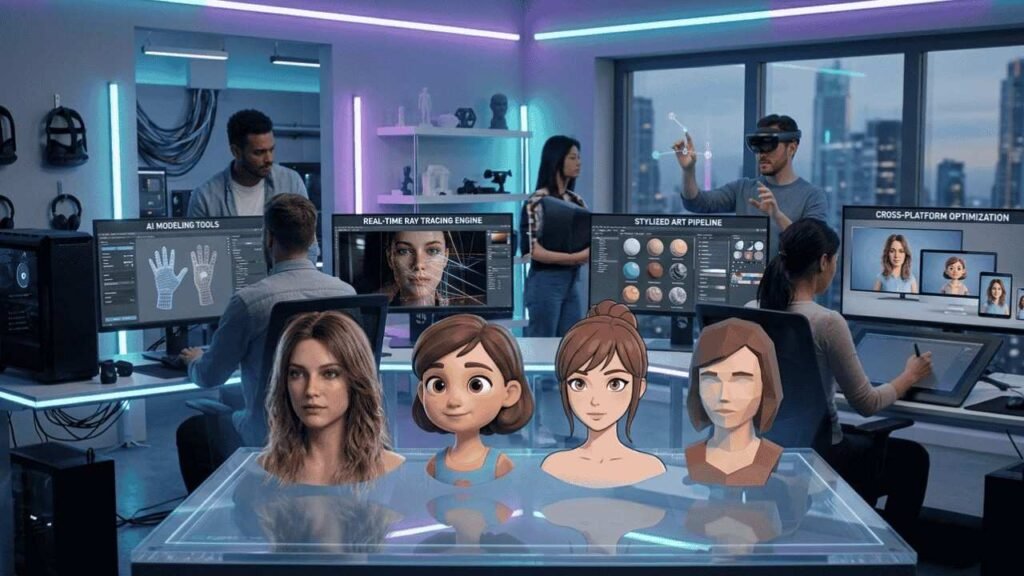
AI-assisted 3D modeling tools — including generative mesh creation and texture synthesis — are compressing production timelines significantly. Real-time ray tracing is gradually making photorealistic characters viable in game engines. Meanwhile, stylized aesthetics are experiencing a commercial renaissance: audiences are showing strong preference for distinctive artistic identity over technical showmanship.
The most important emerging trend? Cross-platform style optimization — designing characters that maintain visual coherence from a 4K monitor down to a mobile screen.
FAQ – 3D Character Art Styles
What are 3D character art styles?
3D character art styles are visual design systems that define how a character is modeled, textured, and rendered — ranging from photorealistic to highly stylized.
What is the difference between stylized and realistic 3D characters?
Realistic characters prioritize anatomical accuracy and PBR materials; stylized characters prioritize artistic expression, exaggeration, and visual identity.
Which 3D character style is best for games?
It depends on your platform, budget, and audience. Semi-realistic and stylized styles offer the best balance of visual quality and performance for most games.
What is the cheapest 3D character art style?
Low poly is the most cost-efficient, followed by cartoon/toon styles.
Can you mix different 3D character styles?
Yes, but intentionally. Style mixing must serve a narrative or creative purpose to avoid visual incoherence.
What tools are used to create 3D characters?
Blender, Autodesk Maya, and ZBrush are the industry standard trio for modeling, rigging, and sculpting.
Related Articles
shape language character design
color theory for character design
Final Word
3D character art styles are not decoration — they are strategic decisions that sit at the intersection of art, technology, budget, and audience psychology. Whether you’re building the next open-world RPG, a mobile game, or a brand mascot, your style choice cascades through every downstream decision.
The studios that win aren’t those with the biggest budgets. They’re those who understand their constraints, know their audience, and commit to a style with conviction and technical excellence.
If you’re at the decision point — evaluating styles for a new project or refining an existing pipeline — start with platform and audience, then work backward to style and toolchain. That sequence saves time, money, and creative energy.