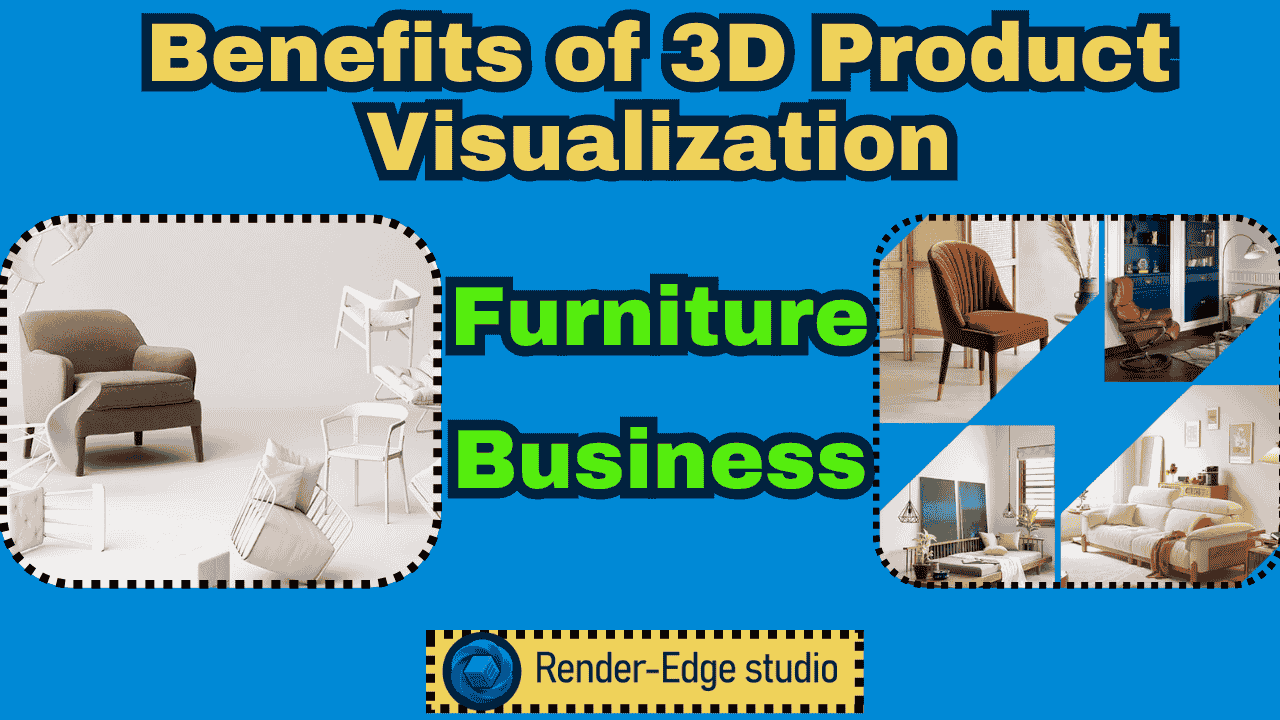
Picture this: A customer browsing your furniture website can spin a sofa 360 degrees, zoom in to see fabric textures, and even change colors with a click. No photoshoot required. No physical samples needed. That’s the power of 3D product visualization, and it’s transforming how furniture businesses operate.
If you’re running a furniture company, you’ve probably felt the squeeze. Traditional photography is expensive. Physical prototypes pile up. Customers return products because “it looked different online.” Sound familiar? Let’s break down how 3D visualization solves these headaches while boosting your bottom line.
What Exactly Is 3D Product Visualization?
Think of it as creating a digital twin of your furniture. Using specialized 3D rendering software, designers build photorealistic 3D furniture models that look identical to the real thing—sometimes even better.
Unlike flat photos, these models are interactive. Customers can view products from every angle, customize finishes, and see how pieces fit in their space. Furniture manufacturers and interior designers now rely on this technology to showcase products before they’re even built.
The best part? One digital model creates unlimited variations. Change the fabric color? Done. Show different wood finishes? Easy. Try doing that with traditional photography.
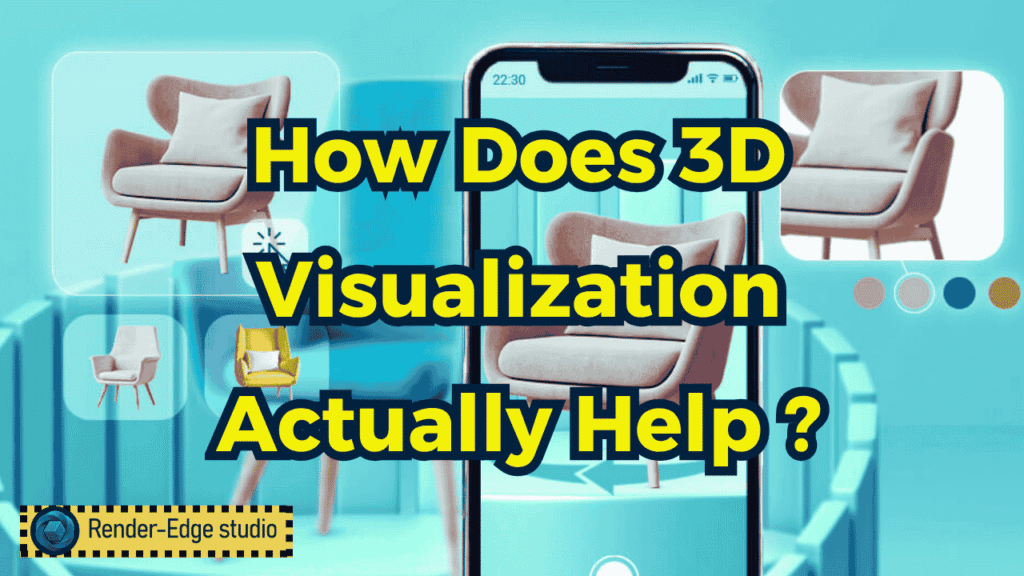
7 Benefits of 3D Product Visualization for Furniture Business
1. Slash Your Marketing Costs in Half
Traditional photoshoots are brutal on budgets. You need photographers, studios, lighting equipment, and physical samples in every color and finish. A single product line can cost thousands.
3D furniture visualization services flip this model. Create one digital asset, then generate unlimited images, videos, and animations. Need lifestyle shots? Your product visualization studio renders them without staging furniture or hiring models.
Real numbers matter here. Furniture companies report saving 40-60% on visual content costs after switching to 3D rendering. That’s money you can pump into product development or marketing campaigns.
2. Speed Up Time-to-Market
Remember waiting weeks for prototypes? Then another week for the photoshoot? Those days are gone.
With 3D rendering for furniture design, you visualize products while they’re still in the design phase. Test materials, tweak dimensions, and get stakeholder approval—all digitally. This cuts product launch timelines by 30-50%.
One furniture brand we studied launched a new collection in just 6 weeks using 3D visualization. Their previous process? Four months minimum.
3. Create Unlimited Product Variations Without Extra Inventory
Here’s where things get interesting. Let’s say you offer a chair in 20 fabric options and 5 wood finishes. That’s 100 variations. Manufacturing and photographing each one? Impossible.
Virtual product visualization for furniture solves this. Create the base model once, then swap materials digitally. Customers see every option without you producing a single physical sample.
This is gold for e-commerce platforms. Shoppers expect choices, and 3D visualization delivers without exploding your inventory costs.
4. Boost Online Sales Through Better Customer Experience
Would you buy a $2,000 sofa from a single flat photo? Probably not. But what if you could examine every stitch, spin it around, and see it in different colors?
Augmented Reality (AR) takes this further. Customers use their phones to place virtual furniture in their actual rooms. No guesswork. No buyer’s remorse.
Stats back this up. Products with 3D visualization see conversion rates jump 40-94% compared to static images. Why? Because shoppers feel confident about what they’re buying.
Furniture animation boosts online sales by showing products in action. A recliner that actually reclines. A sofa bed transforming. Movement builds trust and excitement.
5. Dramatically Reduce Product Returns
Returns kill profit margins. In furniture, the average return rate hovers around 15-20%. Most returns? “Looks different than expected.”
When customers interact with photorealistic 3D furniture models, they know exactly what’s coming. They’ve zoomed in on fabric texture. They’ve seen accurate colors in different lighting. They’ve confirmed dimensions.
Result? Return rates drop by 25-35%. That’s fewer logistics headaches and more profit per sale.
6. Strengthen Your Brand Across All Channels
Consistency matters. Your furniture should look identical whether someone sees it on your website, Instagram, Amazon, or in a catalog.
3D visualization in furniture marketing ensures this. One master file feeds every channel. No more mismatched colors between your website and amazon 3D product rendering. No confusion about what the product actually looks like. To get a clear idea check out the benefits of 3D rendering for Amazon Sellers.
This builds brand trust. When shoppers see the same high-quality visuals everywhere, they perceive your brand as professional and reliable.
7. Future-Proof Your Visual Assets
Here’s a scenario: You redesign your website or launch on a new platform. Suddenly you need product images in different formats, sizes, or contexts.
With traditional photography, you’re scheduling another shoot. With 3D assets, you’re rendering new images in hours. Need a vertical image for mobile? Done. Want a video for TikTok? Easy.
Furniture designing software integrates with these 3D models, making updates seamless. As technology evolves—think virtual showrooms or metaverse stores—your 3D assets adapt instantly.
Comparing 2D Images vs 3D Animations: What Works Better?
Let’s be honest. Static images still work for simple products. But furniture? That’s a different story.
| Feature | 2D Images | 3D Animations |
| Customer Engagement | Low | High |
| Product Understanding | Limited angles | 360-degree view |
| Customization Display | Requires multiple shoots | Instant variations |
| Production Cost | High for variations | One-time investment |
| Return Rate Impact | Higher | Lower |
| AR Compatibility | No | Yes |
Product animation increases sales because it mirrors the in-store experience. Customers don’t just see furniture—they experience it. Here is a detailed guide on comparing 2d images vs 3d animation.
Real-World Success: How Furniture Businesses Win with 3D
Take a mid-size furniture manufacturer struggling with high photography costs. They switched to furniture prototyping and design visualization using 3D rendering.
Results after 6 months:
- 52% reduction in visual content costs
- 38% increase in online conversion rates
- 28% drop in product returns
- Launched 3 new collections in the time it used to take for one
Another example? A DTC furniture brand implemented AR visualization. Customers could place sofas in their living rooms virtually. Their sales jumped 65% within a quarter.
These aren’t exceptions. They’re becoming the norm for furniture businesses that embrace 3D technology.
How to Get Started with 3D Product Visualization
You don’t need to be a tech wizard. Here’s a simple roadmap:
Step 1: Audit Your Current Visual Assets
What products need visualization? Which ones drive the most sales?
Step 2: Choose Your Approach
- In-house team (higher upfront cost, more control)
- Partner with a product visualization studio (faster, professional results)
- Hybrid model (outsource initially, build skills internally)
Step 3: Start Small
Pick 5-10 best-selling products. Create 3D models and test them on your website.
Step 4: Measure Results
Track conversion rates, return rates, and customer engagement. Compare before and after.
Step 5: Scale Up
Once you see ROI, expand to your full catalog.
Pro tip: Look for studios experienced with 3D furniture visualization services. They understand furniture-specific challenges like fabric rendering and material accuracy.
Common Questions About 3D Visualization for Furniture
1. How much does 3D product visualization cost?
It varies. Basic 3D models start around $200-500 per product. Complex pieces with multiple materials might run $1,000-2,000. Compare that to photoshoots costing $5,000+ for a full product line. Check out 3D product animation cost.
2. How long does it take to create a 3D furniture model?
Simple pieces? 3-5 days. Complex designs with intricate details? 1-2 weeks. Still faster than traditional product development cycles.
3. Can 3D visualization really match photography quality?
Absolutely. Modern photorealistic 3D furniture models are indistinguishable from photos. Sometimes they’re more accurate because lighting and colors stay consistent. Check out which one you should use: product photography or animation.
4. Do I need special equipment to use 3D visualization?
Not really. Most furniture designing software runs on standard computers. If you’re working with a visualization studio, they handle the technical side.
5. Will 3D visualization work for my specific furniture style?
Yes. Whether you sell modern minimalist pieces or ornate traditional furniture, 3D rendering captures every detail. Material libraries include everything from leather to velvet to reclaimed wood.
Final Thoughts
The furniture industry is shifting. Customer expectations are rising. E-commerce is exploding. Traditional methods can’t keep up.
3D product visualization for furniture business isn’t just a nice-to-have anymore—it’s essential for staying competitive. You’ll save money, launch faster, sell more, and keep customers happier.
The benefits of 3D product visualization extend beyond just pretty pictures. You’re building a flexible, scalable system that grows with your business. As customer experience (CX) becomes the key differentiator in furniture sales, 3D visualization puts you ahead.
Start small if you need to. Test it on a few products. But don’t wait. Your competitors are already exploring this technology. The question isn’t whether to adopt 3D visualization—it’s how quickly you can make it work for your furniture business.
Ready to improve online furniture sales with 3D visuals and enhance customer experience through 3D rendering? The future of furniture marketing is here, and it’s beautifully rendered in three dimensions.
Important Guide