
Comparing 2D Images vs 3D Animations for Furniture Marketing
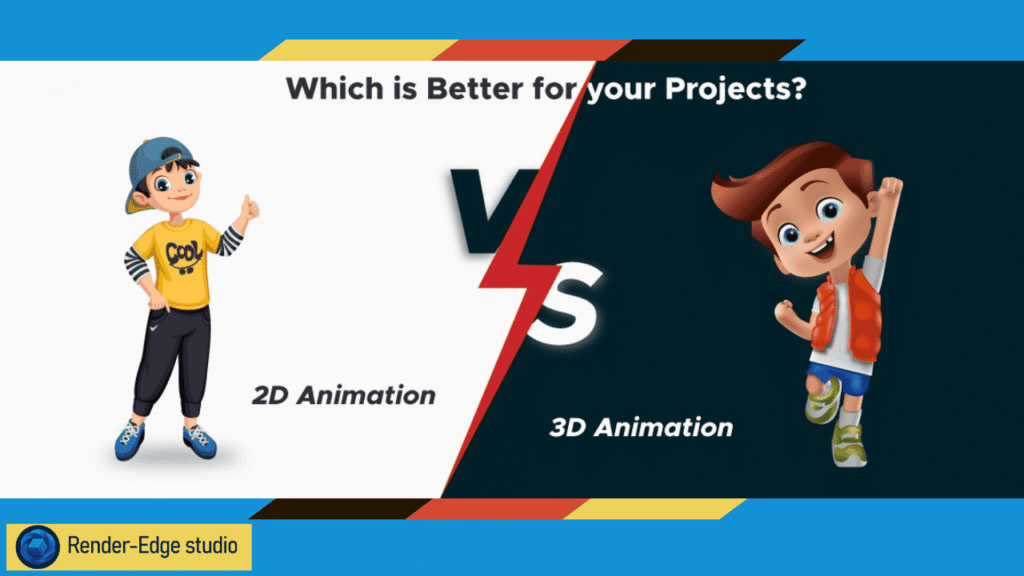
Imagine this: You’re browsing an online furniture store. One item has a flat, basic photo. The next item? A beautiful 3D animation that allows you to rotate the sofa, zoom in on the fabric, and see it from all angles. Which one do you click “add to cart”? If you picked the second, you’re not alone. The furniture is experiencing a new visual revolution, with 3D animations that bring product imaging to life over traditional 2D images. But that’s the million dollar question. Do you stick with the tried and true? Or do you fully embrace 3D animations in your furniture marketing? Let’s talk about it! What Is the Difference Between 2D Animation and 3D Animation? Think of 2D images as looking at a postcard. It’s flat, straightforward, and shows you one perspective. Now imagine 3D animations as holding the actual object in your hands. You can rotate it, examine it from different angles, and truly understand what you’re looking at. Here’s the simple breakdown: 2D Images: 3D Animations: The difference isn’t just technical. It’s about how your customers feel when they interact with your products online. Why 2D Images Still Matter in Furniture Marketing Before we crown 3D animations as the undisputed champion, let’s give 2D images their fair share of credit. Speed and Simplicity Need to promote something quickly? 2D product photography can get you there quickly – a pro photographer can shoot an entire furniture line in one day. No expensive or complex 3D rendering software; no weeks of building a model and adding textures; Just point, shoot and edit. Budget-Friendly for Startups If you’re a small furniture business starting off, 2D images make financial sense. There’s no need to invest in expensive furniture design software or hire specialized 3D artists. You can usually get away with a good camera and light. Perfect for Technical Specifications When companies need building plans or assembly instructions, 2D technical drawings are extremely straightforward. Carpenters and factory workers recognize them immediately. You could think of them as the common language spoken in the production of furniture. Easy Updates and Modifications Altered a color of a fabric? All you need to do with your 2D images, is just take another photograph of that specific angle. It’s easy and doesn’t require skill. But here’s where 2D images fall short: They’re unable to illustrate how a recliner reclines. They are unable to show how smoothly cabinet drawers slide. They can’t invite customers to imagine furniture within their space. And in a world full of digital advertising campaigns, this is a significant limitation. The Game-Changing Power of 3D Animations in Furniture Marketing Now, let’s talk about why 3D animations are revolutionizing visual marketing strategies for furniture brands. Product Animation Increases Sales (Here’s How) Studies show that product pages with 3D visualization see conversion rates jump by up to 40%. Why? Because 3D animations answer the questions customers have before they even ask them. Real-Life Example: IKEA added 3D product visualization to their app. Customers can now utilize augmented reality to place virtual furniture in their real-life rooms. The end result? Much lower return rates and greater customer confidence. Here is a guide on how product animation increases sales. That’s the value of letting people “try before they buy.” Benefits of 3D Product Visualization Let me paint you a picture of 3D product visualization benefits: 1. Show Functionality in Action 2. Create Emotional Connections 3D animations don’t merely display products; they tell stories. Add ambient lighting, furnish a space with beautiful furniture, and all of the sudden you’re not selling a chair, you’re selling a lifestyle. 3. Unlimited Customization: Would you like to see the same dining table in 12 different wood finishes? By using 3D rendering, you model once, and change any materials or colors with a few clicks. No need for multiple photo shoots. No storage issues with different samples. 4. Perfect for Amazon 3D Render Requirements: Amazon now prioritizes listings with 3D renders and 360-degree views. If you’re selling furniture on major e-commerce platforms, 3D visualization isn’t optional anymore—it’s expected. Here is our detailed guide on Benefits of 3D Rendering for Amazon Sellers. How 3D Animation Boosts Furniture Sales Here’s where things get really interesting. Interactive Product Configurators Imagine customers building their perfect sectional sofa online. They choose: All visualized in real-time 3D. This level of personalization drives serious purchasing decisions. Virtual Showrooms Furniture animation service providers are now developing entire virtual showrooms. Consumers can now move through a space in a digital capacity and examine products from every angle without leaving the comforts of their couch. During the pandemic, brands that had invested in 3D visualization were able to sustain sales, while companies who only had static images struggled. If you are interested here is a guide on Ways 3D Furniture Animation Boosts Online Sales. 2D vs. 3D Product Visualization: The Head-to-Head Comparison Let’s put them side by side so you can make an informed decision. Feature 2D Images 3D Animations Production Speed Fast (days) Slower (weeks) Initial Cost Low ($500-$2,000) Higher ($2,000-$10,000+) Viewing Angles Limited to what’s photographed Unlimited 360° rotation Customization Requires reshoots Instant digital changes Customer Engagement Moderate High (interactive) Return Rates Higher (expectation mismatch) Lower (accurate visualization) Mobile Experience Static viewing Interactive exploration AR/VR Integration Not possible Seamlessly compatible Long-Term Cost Ongoing photo shoots One-time investment, reusable SEO Value Standard image optimization Rich media boosts rankings When Should You Choose 2D Images? 2D images still make sense in specific situations: When Should You Choose 3D Animations? 3D animations are your best bet when: Product Animation vs Product Photography: Can You Use Both? Here’s a secret the best furniture brands know: You don’t have to choose just one. The Hybrid Approach: Start with 3D rendering for your core collection. Use it to create: Then supplement with lifestyle 2D photography showing: This combination gives you the technical accuracy of 3D with the emotional warmth of real photography. You can also check out this guide on 3D Product Animation vs
Benefits of 3D Rendering for Amazon Sellers – Increase sales
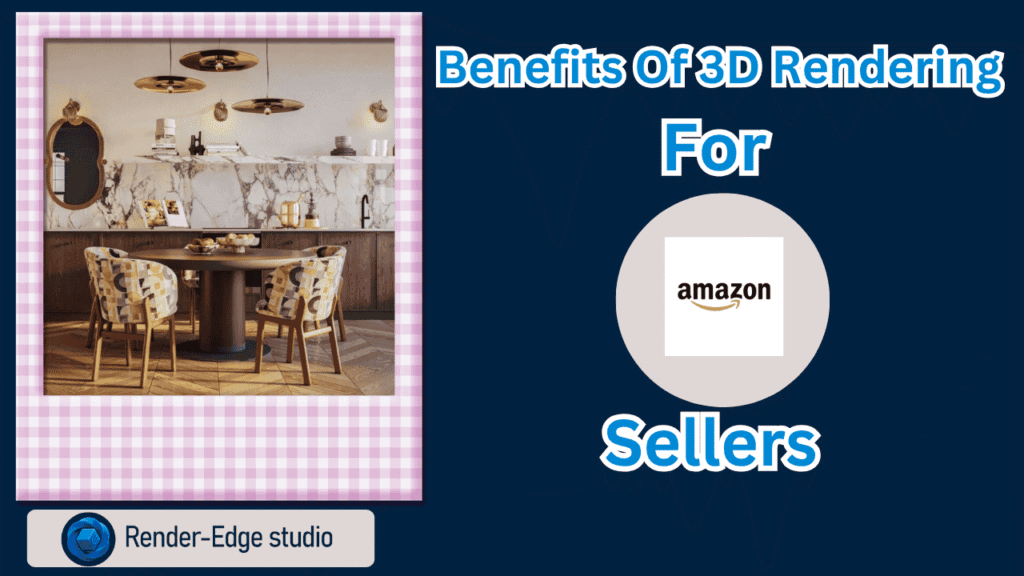
Promoting products on Amazon can feel like you are yelling into a crowded room. There are millions of products competing for shoppers’ attention and they quickly scroll through product listings. The question is, how do you make your product stand out from the rest? The answer is 3D rendering! This article will discuss the benefits of 3D rendering for Amazon sellers, examples of real-life companies using 3D renderings, and how this technology can change your listings on Amazon! What is 3D Product Rendering? You can think of a 3D product rendering as a digital twin of your product! A designer builds a very detailed 3D model based on your real product using 3D rendering software. Colors, textures and lights are added to make it look realistic. You no longer need to have physical samples, boring expensive studios or hours of a photo shoot to then get the needed images to market your product. Just zoom, rotate, or alter the model infinitely as your game’s source content is complete. Benefits: Why 3D Renders Are a Game-Changer for Amazon Sellers You may be thinking, “Can’t I just use pictures?” Absolutely, but here’s how 3D rendering is unique: 1. Interactive Product Visualization The customer can interact with, spin, and zoom into the product digitally. This instills confidence, especially with higher items like furniture or electronics. 2. Consistency Across Listings All your images have the same lighting, background, and style. This represents your brand as more professional and helps build trust. 3. Cost-Effective Over Time Even though developing a 3D model does take some time upfront, you can use the slice of 3D models for: 4. Quicker Time to Market You can list products before the initial batch has been produced at all. Sellers can use their 3D renders to start pre-launch campaigns and make early sales. How 3D Product Rendering Can Improve Amazon Conversion Rates Conversion rates are king. More views don’t mean more sales unless your visuals engage customers. Feature Traditional Photography 3D Rendering Angles Limited Unlimited, interactive Color Variations Reshoot required Adjust digitally Detail Clarity Can be lost in lighting Always crisp and accurate Time-to-Market Delayed by photoshoots Immediate after modeling Cost per Variation High Low once model exists By adding 3D renders to your listings, you can increase customer engagement, reduce returns, and boost sales. Real-Life Example: A furniture brand used 3D renders for a new sofa collection. Customers could view the sofa from every angle and even see fabric textures closely. The result? 30% higher engagement and 25% fewer returns compared to standard photos. Step-by-Step Guide: How to Create 3D Product Images for Amazon Listings Here is an easy to follow workflow, even for beginners: Step 1: Pick Your Software Step 2: Create Your Model Have many reference images and/or blueprints so you can get the exact size. Step 3: Create Your Textures + Add Materials Try to recreate real surfaces (wood, metal, fabric) as best as you can for an authentic render. Step 4: Set Up Your Lighting Test out What is the difference between animation and 3D render? Rent ways to light the product so it brings out its features without being too hard in shadow. Step 5: Render and Post-Process Keep the editing to photo-shop, mainly for contrast and color balance and nothing more. Again, do not let the editing take away the realistic quality. Step 6: Create Variations Change the color, size or a feature of the model digitally without having to create a new model. Places to Incorporate 3D Renders on Amazon 3D renders are not just beautiful visuals, they are an effective sales tool when used in particular ways: Example: One electronics seller used 3D renders for a smart home device by showing exploded views, multiple colors, and interactive visuals. This resulted in a 20% increase in conversion rates. Benefits for FBA Sellers If you sell on Amazon FBA, 3D rendering addresses distinct issues: 1. Fewer Returns: Now the customer has a clear view of the product they will receive. 2. Faster Time to Market: You won’t have to wait for physical samples of products to develop accurate sales materials. 3. Increased Marketing Flexibility: You can utilize product images and videos on sites like Shopify, Etsy, eBay, and others. Case Study: A startup selling vacuum cleaners created 3D renders of its product, which were utilized before manufacturing and rather than product samples. The company started a pre-order campaign that accurately represented the product, and within a week of launching the pre-order campaign, they sold out 100 units prior to the first shipment. Main Points Final Thoughts There are countless advantages to 3D rendering for Amazon sellers. From increased conversion rates to decreased return rates, it’s a way to combine creativity, technology, and a solid marketing strategy into one tool. Whether you’re an e-commerce entrepreneur, Amazon seller, or FBA start-up, the use of 3D renders will help your products stand out, look professional, and sell quicker. Start small and only use 3D rendering for one flagship product, then test out interactive 3D visuals, track engagement and view your Amazon listing performance improve. With 3D product rendering, you’re not just selling a product. You’re selling a visually engaging experience. FAQs About 3D Rendering for Amazon Sellers Q1: Can 3D renders replace photography completely? Yes, for main images and product variations. However, lifestyle shots sometimes benefit from real photography. Q2: Are 3D renders expensive? Initial costs are higher than a photoshoot, but once created, they save money for multiple products and variations. Q3: How long does it take to create a 3D render? Depending on complexity, 1-5 days for a single product. Variations take hours, not days. Q4: Which products benefit most from 3D rendering? Electronics, furniture, kitchen gadgets, FBA products with sturdy surfaces. Soft or wearable items are trickier. Q5: Do Amazon guidelines allow 3D renders? Yes, as long as the main image meets requirements: white background, no props, 85% product coverage. Read More About : Key Benefits of 3D Visualization and Guide for
3D Product Animation vs Product Photography: Which One Should You Choose?
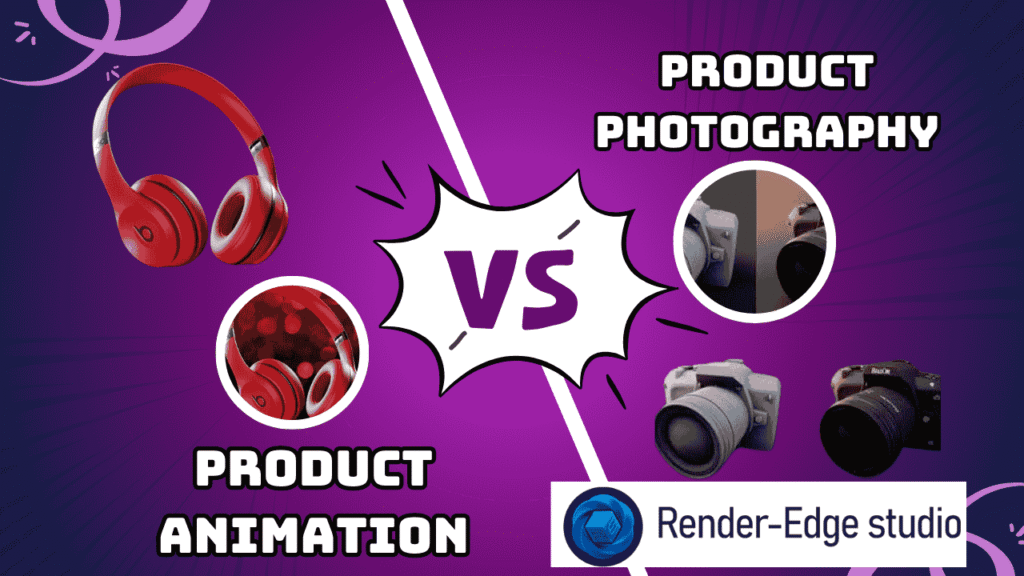
When it comes to displaying products online, a question businesses often ask themselves is: should you stick with traditional product photography or take the plunge into 3D product animation? Each has specific benefits, but understanding how they differ will guide brands in making educated decisions of product marketing, e-commerce, and digital presentations. In this guide, we’ll look at everything from cost comparisons and creative flexibility to actual applications, so that you have a clear understanding of which is right for your products. What Does 3D Product Animation Mean? Think of 3D product animation as putting a pulse into your digital models. Designers utilize Computer-Generated Imagery (CGI) and 3D Rendering to make interactive, lifelike animations of products that may not even exist yet. 3D animations allow potential purchasers to do things that static photographs cannot, such as: For example, if you’re launching a new, futuristic accessory or piece of custom furniture, a 3D animation can show it to your customers in ways the best camera could never achieve. 3D product animation is compelling and flexible—you can change as many aspects of the product after the fact without the need to invest in a new photo shoot. Learn more about how you can apply 3D animation to your products here: 3D Product Animation. What is Product Photography? Product photography is the traditional approach to photographing real products using a camera. This encompasses a variety of images from e-commerce images to commercial photo campaigns. It’s real, honest and offers customers a real view of your product. The benefits of product photography are: The drawbacks are: it’s costly to make changes and photographing more complicated or non-existent products can be nearly impossible. Key Differences Between 3D Animation and Product Photography Let’s break it down into an easy-to-read table for clarity: Feature 3D Product Animation Product Photography Flexibility Can show products from any angle, in any environment. Easy to update. Fixed once shot. Changes require reshoots. Cost Can be cost-effective for complex products or multiple variations. Usually cheaper for simple, real products. Expensive for complex setups. Creativity Unlimited: can create conceptual or impossible scenes. Limited by physical environment and lighting. Interactivity Allows 360° views, motion graphics, AR/VR integration. Static images; no interactive elements. Time Efficiency Quick updates, revisions, and iterations. Time-consuming to set up, shoot, and edit. Use Case Unreleased products, complex or highly customizable items, immersive e-commerce experiences. Simple existing products, when realism and authenticity are key. To get a clear idea you check out this guide on Comparing 2D Images vs 3D Animations. Why Use 3D Product Animation? 3D product animation is not just eye-catching; it’s an effective marketing tool. Here’s why more brands are utilizing it: Unlimited Creative Potential In 3D animation, you are not limited by the physical reality of the objects. You can have a product hovering in space or have a product do something that simply isn’t possible in reality. Interactive Style Customers love things that are interactive. Everyone knows the common 360° views of product videos, even the pull AR try-on services, there is a level of engagement and memorability that 3D animation can bring to shopping experiences. Gives you an edge with eCommerce Digital platforms like Amazon and Shopify rank visually rich product content higher in their search categories. Quality animation can also save time, and lower returns rates, giving insight to customers before they make a purchase. Cost-Effective for complex products For products that have many variations and custom options, or products that are prototypes, 3D animation can be a more cost-effective alternative than shooting multiple photo sessions. Boosted Brand Image Sleek animations can suggest attention to detail, sophistication, and professionalism, all of which elevate trust and the perception of quality for customers. Real-world examples of how 3D animation can drive conversion or increase sales can be seen here: How 3D Product Animation Increases Sales? When Product Photography Continues to Matter Although 3D animation can be exciting, photography still has its place: 1. Real Products Only: When the product is real and simple, often photography will suffice. 2. Affordable and Simple: A simple shoot can be less expensive than creating a single, simple 3D product. 3. High Fidelity Detail: When you need to see, feel, or touch realistic detail like fabric or textures, photography usually still feels more real. For example, when a clothing brand is trying to show and convey fine fabric textures, they may show a commercial product photograph, since they want viewers to associate their product with quality. A Corporate Framework: Assessing the Best Approach The following simple workflow will assist you in determining if you should pursue your project with 3D animation or product photography: 1. Evaluate Your Product Complexity 2. Clarify Your Marketing Goals 3. Consider Your Budget and Timeline 4. Examine What Engages Your Audience 5. Option For Both! Many successful brands provide a hybrid approach of 3D product animation for online marketing and video (as well as social media) along with photography for a catalog or print. Real-Life Examples 1. Furniture E-commerce: Offering 3D furniture animations so customers can spin and view different chairs, tables, and couches from a 360° angled perspective before they make a purchase. For additional examples of such interactive animations, you can check 3D Furniture Animation Services. 2. Medical devices: As a 3D animation can depict complex or involved processes, so products can be shown safely and clearly in use. Learn more about similar projects at Medical Product Animation Services. Cost Comparison: 3D Animation vs Product Photography Aspect 3D Product Animation Product Photography Single Product $500–$2,500 (depends on complexity) $100–$1,000 (depends on shoot) Multiple Variations Cost-effective: small incremental changes Expensive: separate photoshoots needed Time to Update Hours to days Days to weeks for reshoots Creative Freedom Unlimited Limited Key Takeaway: 3D animation becomes more cost-effective as product complexity increases. Important Points Final Thought: Picture this: You’re not just showing your prospective customer a view of your product. Instead, imagine providing them with a spinning view outside of a standard flat view, allowing them to
How 3D Product Animation Increases Sales?
In today’s fast-paced digital marketplace, simply showcasing your products with static images or traditional videos isn’t enough. Do you know what customers want? Customers want more—they want to see, interact, and understand your product before buying. This is where 3D product animation comes in. If you’ve ever wondered how 3D product animation increases sales, then you are in the right place. This guide will explain it in detail, with actionable insights, examples, and strategies to elevate your marketing campaigns. Whether you’re a product manufacturer, a furniture brand, an electronics company, or an e-commerce store owner, leveraging 3D animation can significantly boost customer engagement, enhance conversion rates, and improve your overall marketing strategy. Yes this is 100% true. Let’s begin. What is 3D Product Animation? 3D product animation is the process of creating three-dimensional digital representations of products, which can rotate, move, and demonstrate features in a lifelike environment. Unlike standard images or 2D videos, 3D animations offer depth, realism, and interactivity, allowing potential customers to explore every aspect of a product. Key components include: Let’s for example: A furniture brand can show how a sofa converts into a bed, highlighting hidden storage compartments, all within a 3D animation that customers can interact with online. If you need , you can check out our 3D furniture animation services. Why 3D Product Animation Matters for Sales The value of 3D product animation goes beyond aesthetics—it directly impacts sales and conversion rates. Here’s why: 1. Enhanced Product Visualization Customers can view your product from every angle, zoom in on intricate details, and even explore internal mechanisms. This level of detail builds trust and helps buyers make informed decisions. Real-Life Example:A home appliance brand used a 3D animation to showcase a blender’s multi-functional attachments. As a result, online sales increased by 25%, and product return rates decreased. 2. Increased Customer Engagement Interactive animations encourage customers to spend more time on your site, exploring features in a gamified, engaging way. Longer engagement often translates into higher conversion. Quick Stats: 3. Simplified Product Explanation 3D animations make complex products easier to understand. Features, assembly steps, or unique functionalities can be demonstrated clearly, reducing confusion. Example: Car manufacturers can illustrate how advanced safety systems work or show an engine’s internal components in motion, enhancing trust in their products. 4. Better E-Commerce Listings 3D animations provide 360-degree product views, interactive demos, and high-quality visuals that stand out on platforms like Amazon, Shopify, or Etsy. This increases click-through rates and conversion. Benefits of 3D Product Visualization for Sales Benefit How it Helps Real-Life Example Improved Engagement Interactive features keep customers exploring longer Electronics brand demoed headphones with 360° spin; engagement increased 40% Higher Conversion Rate Clear product understanding boosts purchase confidence Furniture brand’s animated sofa assembly tutorial reduced returns by 30% Visual Storytelling Highlight product features and USP effectively Car manufacturer showcased safety features through animated scenarios Reduced Returns Customers know exactly what to expect Kitchen appliance demo showed dimensions and usage scenarios Shareable Content Animations can be used in ads, social media, and newsletters Beauty brand’s animated product demo went viral on Instagram 3D Animation Marketing Strategies That Work Step-by-Step Guide: Creating a 3D Product Animation That Boosts Sales Note: If you want you can contact Render Edge Studio a 3D animation services provider company. They provide 1. 3d product animation 2. medical animation 3. architectural and interior visualizations How 3D Product Animation Impacts Conversion Rate Example: An automotive parts brand increased online sales by 35% after integrating 3D animation that demonstrated installation steps. Interactive 3D Product Presentation Advantages FAQs About 3D Product Animation Q1: How much does 3D product animation cost? A: Costs vary by complexity, length, and software used. Small projects may start at $500–$1,000, while complex animations for high-end products can exceed $10,000. Q2: Can 3D animations increase online sales? A: Yes! By offering interactive product experiences and better visualization, studies show sales can increase 20–50% depending on the industry. Q3: Do I need special software to view 3D animations? A: Most modern browsers and devices support 3D animations. WebGL, HTML5, and optimized video formats ensure accessibility. Q4: How long does it take to create a 3D product animation? A: Depending on complexity, it can take 1–6 weeks for high-quality animations. Q5: Which industries benefit most from 3D product animation? A: Electronics, automotive, home appliances, fashion, e-commerce stores and furniture brand see significant ROI. Key Takeaways Final Thoughts on Product Animation If you want to truly answer the question “how 3D product animation increases sales?”, the answer lies in engagement, clarity, and interactivity. By offering customers a realistic, immersive, and interactive experience, 3D product animations bridge the gap between digital and real-world shopping experiences. Whether you’re a product manufacturer in the USA, UK, or Germany, or an Amazon/Shopify seller aiming for global reach, integrating 3D product animation into your marketing strategy will: Don’t let static images and plain videos limit your sales potential. Start leveraging interactive 3D product demos today and see how they transform your e-commerce growth. Check out our 3D Product Animation Services to get started with professional, high-quality product animations to boost your sales. Read More About: Is 3D Animation Easy? 2D or 3D, Find Out How Beginners Can Start What Is The Cost of 3D Architectural Animation? How Medical Animation Can Boost Your Sales And Increase Roi? 3D Product Animation vs Product Photography. Benefits of 3D Rendering for Amazon Sellers
